
How to Choose Vegan Shoes for Fit, Comfort and Daily Wear
Choosing vegan shoes for everyday wear is about more than finding a pair that looks good or carries a vegan label. The right choice balances fit, comfort, material behaviour, construction, versatility and the demands of your actual routine. Compare men’s vegan shoes, women’s vegan shoes and designer vegan trainers by looking at your foot shape and the shoe’s design rather than relying on the category on the product page.
Start with the question: where will you wear them most? Commuting, walking around a city, travel, casual plans and smart-casual outfits call for different compromises from technical running, hiking or court footwear. Vegan status confirms that animal-derived materials are not used, but it does not by itself prove comfort, durability, ethical sourcing or a lower overall environmental impact. Treat it as one part of your decision, then assess the shoe as a whole.

1. Check the fit before judging the feel
Fit is the first filter for any everyday shoe. Measure both feet at the end of the day while wearing the socks you expect to use, and compare the longer foot with the brand’s own measurements rather than relying on a familiar number. A useful size guide should show the sizing system, conversions and, ideally, foot length and width. For LØCI, sneakers are made to EU sizes with US and UK conversions; the LØCI Size Guide also gives model-specific length and width measurements, so use those figures instead of assuming every silhouette fits identically.
When trying a pair on, allow a little space beyond the longest toe so your toes are not pressed against the front, while avoiding so much extra length that your foot slides. The widest part of your foot should sit comfortably within the shoe without pressure, pinching or bulging. Walk, turn and climb a few steps: your heel should remain reasonably secure without rubbing, and the upper should flex with your foot rather than folding sharply across the toes. Check both feet, as they may not be identical.
A soft first impression is not the same as a good fit. Padding can feel pleasant for a few minutes while a narrow toe box, slipping heel or pressure point becomes obvious later. For a brand-specific example, LØCI’s guide recommends the next full size down when a women’s US half size is unavailable, the next full size up when a UK/EU half size is unavailable, and the next full size up for men’s unavailable half sizes. If you fall between sizes elsewhere, follow that brand’s instructions rather than a universal rule. LØCI’s recommendations are specific to its guide, not a rule for every brand.

2. Match comfort, materials and construction to daily use
Comfort comes from how several parts work together: the shape of the last, room for your toes, heel hold, lacing, lining, insole, midsole feel and outsole stability. For a day of commuting and walking, look for a secure fit that does not need constant tightening, cushioning that feels supportive rather than excessively soft, and a sole that bends naturally without feeling flimsy. If you travel, consider weight, packability and whether the materials can be cleaned easily. For technical running, hiking, court sports or long periods on uneven ground, choose footwear designed for that activity rather than asking a lifestyle trainer to do every job.
Compare vegan materials by asking what is actually disclosed: the material name, how the upper and lining are constructed, the sole composition, care instructions and any evidence about sourcing or manufacturing. Vegan leather can offer a polished, structured look that suits workwear, but the label alone does not tell you how breathable, hard-wearing or lower-impact it will be. Textile, mesh and other alternatives may behave differently. Avoid assuming that any vegan material is automatically more sustainable or longer-lasting than every animal-derived option; consider transparency, construction, expected use and repair or replacement prospects together.
A durable everyday pair often reveals itself through practical details: reinforced high-wear areas, clean and secure stitching, a well-bonded sole, a stable heel counter, an insole that can be removed or replaced where stated, and hardware that does not feel fragile. None of these details guarantees a particular lifespan, so look for clear product information and care guidance. Comfort should also be tested gradually: wear a new pair at home first, then for shorter outings before committing to a full day.
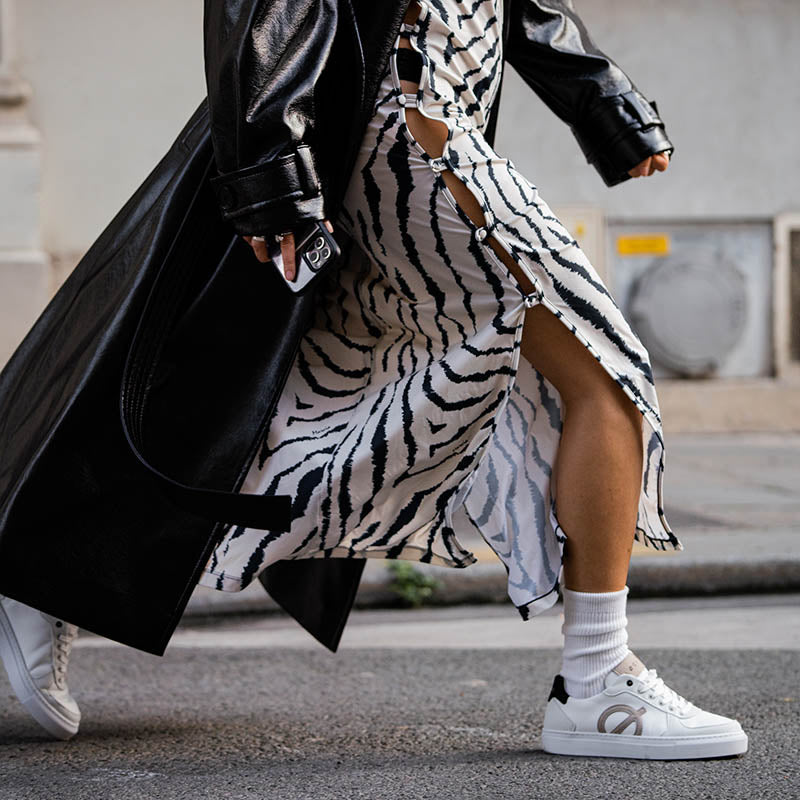
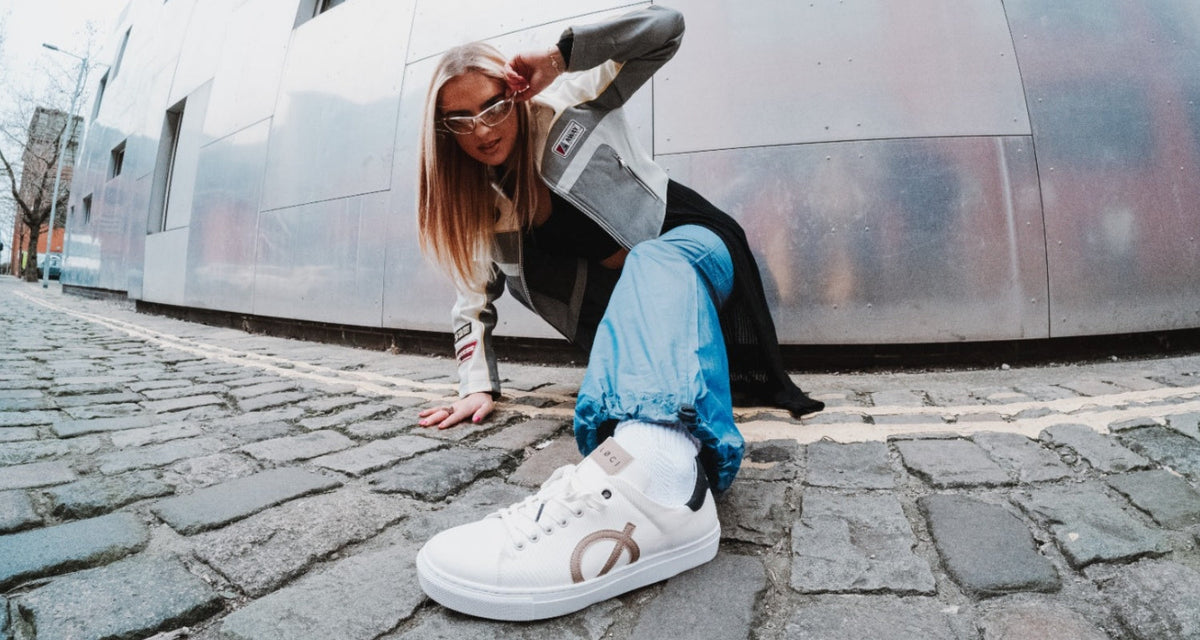
Once you have assessed fit, comfort and construction, product examples can help you picture how different design directions might work in real wardrobes. For a classic, adaptable option, LØCI ØRIGIN in Black/White is described by the brand as a vegan, classic tennis-inspired silhouette engineered for comfort and designed to move from denim to tailoring. For a more substantial visual direction, LØCI NEO in White/Black/Cream is described as a premium vegan-leather, basketball-inspired sneaker with advanced footwear technology and a material that ages gracefully. These are useful examples of different style positions, not assurances that either shape will suit every foot or every activity.

3. Choose a silhouette, colour and care routine you will actually use
Choose proportions and styling details that support the wardrobe you actually wear. A streamlined trainer can look polished with tailored trousers or skirts, while a chunkier profile may sit more naturally with wider-leg trousers, denim and layered casual outfits. Consider how the toe shape, sole height and contrast details relate to your usual silhouettes, then prioritise comfort alongside appearance.
For maximum rotation, consider the colours already in your wardrobe. Black, white, cream, grey and restrained contrast details tend to work across more outfits than a highly directional colourway. A considered accent can still make a simple outfit feel more personal. Choose the pair you can imagine wearing at least twice a week because it fits your routine, not simply because it photographs well.
Care supports longevity, but follow the product’s instructions rather than treating all vegan materials alike. Remove surface dirt promptly with an appropriate soft cloth or brush, allow shoes to dry naturally away from direct heat, and avoid soaking them unless the care guidance permits it. Use shoe trees or paper to help them keep their shape when stored, keep them away from damp conditions, and rotate between pairs where possible so each pair can air between wears. If persistent foot discomfort remains despite trying different sizes or shapes, seek professional advice rather than forcing a particular shoe to work.
Before you buy, use a short final check: confirm the main use, compare the brand’s measurements, assess fit while walking, review material and care information, and choose a colour and silhouette you will genuinely wear. A thoughtful choice is more useful than a pair selected on appearance alone.
FAQ: common questions
How much room should there be at the toes? Leave enough space for your longest toe not to touch the front when standing or walking, without so much extra length that your foot slides. Check both feet against the brand’s measurements.
Is EU sizing more reliable than US or UK sizing? No sizing system removes differences between brands and models. Use the brand’s own chart, conversions and foot measurements; LØCI’s guide is specific to LØCI sneakers.
What should I do if I am between sizes? Check the brand’s half-size guidance, measurements and return policy. Do not assume that sizing up or down works across different models.
Can designer vegan trainers be practical for everyday wear? They can be, provided the fit, construction, care requirements and intended use match your routine. Style does not make a lifestyle trainer suitable for technical activities.
Are vegan shoes automatically more sustainable or durable? No. Vegan status concerns animal-derived materials; compare transparency, construction, expected use, care and likely lifespan together.