

How to Choose Vegan Trainers for Your Foot Shape
Choose a vegan trainer whose shape gives your toes usable room, accommodates your forefoot, holds your heel without slipping and works with the socks, insoles and late-day foot volume you actually have. Use this quick fit process before committing to a pair for commuting, travel or everyday high-street wear.
Start by measuring both feet while standing, then compare the longer foot with the relevant model information. A familiar UK or US size is only a starting point: LØCI sneakers are made to EU sizes, with UK and US conversions, and the length and width measurements can vary between silhouettes. Check the LØCI Sneaker Size Guide rather than assuming every model fits identically.

1. Measure first: use your longer foot as the starting point
Measure at the end of the day or after you have been on your feet, when your feet may be at their largest. Stand on a sheet of paper in the socks you expect to wear. Keep your weight evenly distributed, mark the back of the heel and the tip of the longest toe, then measure both feet from heel to toe. Also measure across the widest part of each forefoot if width is a recurring problem. Small differences are common, so repeat the process for the other foot and use the longer result for your first size comparison.
Next, open the table for the exact trainer you are considering. LØCI’s size guide gives EU sizing alongside UK and US conversions, plus model-specific length and width measurements; these figures are not interchangeable between every silhouette. If a half size is unavailable, follow the guide’s gendered starting recommendation, then check the listed measurements and your try-on result rather than treating it as a universal answer.


2. Check the toe box and forefoot before you judge the style
Put the trainers on with the laces loosened, stand up and let your toes spread naturally. The longest toe should not touch the front when you are standing or walking. Leave a small, usable gap in front rather than choosing a sharply tapered toe box that presses the tip or sides of the toes. You do not need to force a particular measurement if the shoe shape is clear, but any toe contact, curled toes or pressure that increases when you walk is a shortness warning.
Look at the widest part of your foot—the ball of the foot and the little-toe side. The upper should not form a hard ridge across this area, push the little toe inwards or leave a red pressure mark after a short test. If the length feels right but the forefoot is squeezed, sizing up may create excess length without solving the shape problem. Try a roomier silhouette instead.
A structured vegan leather alternative may hold its shape more firmly, while a knit or mesh upper may feel more flexible. Neither construction should be assumed to stretch, mould to every foot or prevent rubbing. Judge the actual toe-box outline, lining, seams and how the upper behaves as you take a few steps.

3. Secure the heel, then test the fit in real life
Once the toe box and forefoot pass, lace the trainers as you would for the day. Your heel should feel held in place without your toes being forced forwards or the collar digging into the ankle. Walk, turn and use stairs if you can. A small amount of movement can be normal, but repeated heel lift, sliding at the back or quick rubbing is not a fit to ignore.
Repeat the test with the socks, insoles or orthotics you will actually use. A thicker commute sock, padded trainer sock or insole can take up room that seemed available in a thin-sock test. If an insole changes the heel hold or pushes your toes forwards, reassess the size and shape instead of tightening the laces until the top of your foot feels compressed.
Use lacing to fine-tune a generally good fit, not to rescue the wrong one. Adjusting tension can settle the heel or create a little more space over the instep, but it cannot make a short toe box longer or a narrow forefoot broad. Walk for longer and repeat the check later in the day, when swelling-related tightness is more likely to appear.
Exchange the pair if it still causes toe contact, forefoot pressure, persistent heel lift, fast-starting rubbing or painful tightness after these checks. Choose another size or silhouette rather than expecting an already uncomfortable trainer to become wearable.
Final fit checklist: use the longer of both standing measurements, check the exact LØCI model table, confirm toe and forefoot room, secure the heel without over-tightening, then repeat the test with your real socks or insoles and after movement. If the fit fails, change the size or silhouette before the pair becomes an unworn purchase.
FAQ: How do I know whether my foot is narrow, average or broad? Compare your forefoot measurement with the model’s listed width and watch for pressure at the ball of the foot or little toe. If the length is right but the sides are squeezed, the shape may be wrong even if the size number is familiar.
How much room should I leave at the front? Leave a small, usable gap in front of the longest toe so it does not touch the shoe while standing or walking. Toe contact, curled toes or pressure that worsens in motion means the trainer is too short or too tapered.
Should I size up for swelling? Try the pair later in the day or after a longer walk. If it becomes tight as your feet swell, compare another size or silhouette using the model-specific table rather than automatically sizing up and accepting excess heel movement.
Can I rely on the LØCI EU-to-UK/US conversion? Use the conversion as a starting point only. LØCI makes its sneakers to EU sizes, but the guide lists model-dependent length and width measurements. Check the table for the exact silhouette, including ØRIGIN if that is the pair you are considering.
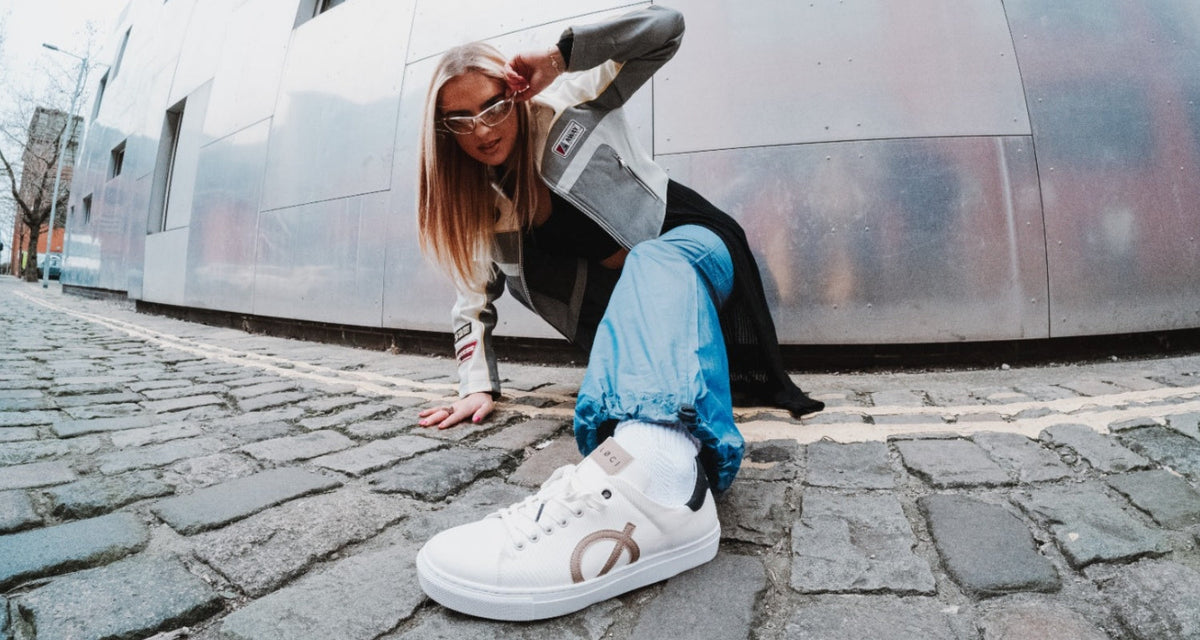
Which LØCI trainer should I look at next? The ØRIGIN White is a vegan, classic tennis-inspired silhouette and a useful place to begin if that style suits your wardrobe. It is not a universal fit recommendation: compare its relevant measurements with your foot and use the checks above before deciding.