
3 Habits and Recovery Rituals to Keep Your Practice Burnout-Free
Have you ever made a burst of progress in a skill, only to see motivation fizzle out as the routine becomes unsustainable? Neuroscience and behavioural science show lasting progress is engineered, not forced: it depends less on grit and more on how you structure practice, shape your environment, and prioritise recovery between sessions.
Adopt three practical habits to prevent burnout and compound progress. Design focused practice with clear, timely feedback. Engineer your environment to reinforce the behaviours you want. Pace practice with restorative rituals that support recovery. Each section offers actionable steps and small experiments so you can turn short bursts into lasting gains without sacrificing wellbeing.
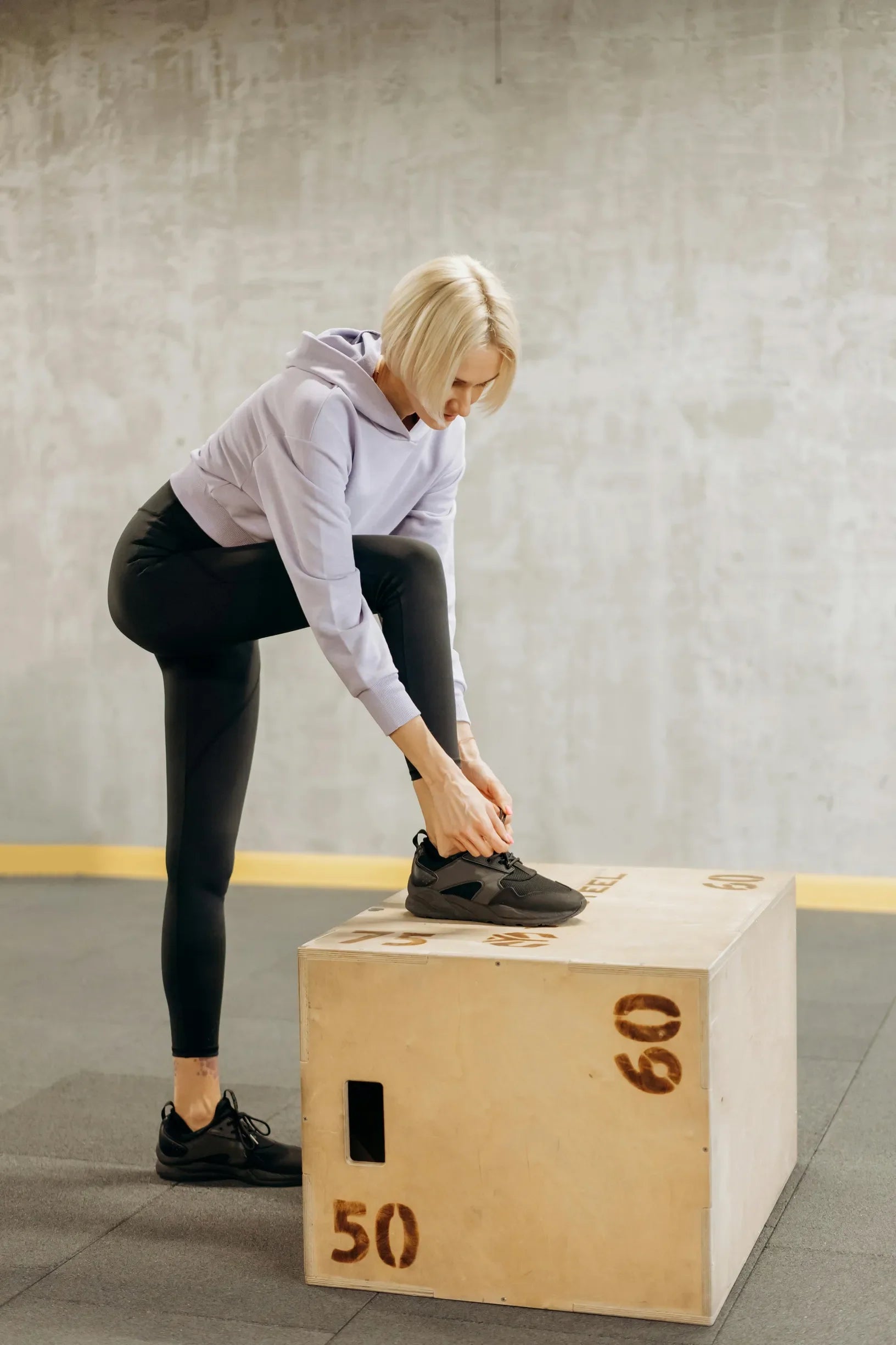
![{"image_loaded": true, "load_issue": null, "description": "A single adult woman with short blonde hair is indoors, standing next to a wooden plyometric box labeled with numbers '50' and '60'. She is wearing a light lavender hoodie, black leggings, and black athletic shoes. She has one foot resting on the box and is bending down to adjust the shoelaces on that foot. The floor is covered with gray gym mats, and the background is a plain, textured concrete wall with a yellow baseboard near the floor. The camera angle is eye-level, and the framing includes her full body and the box.", "people": {"count": 1, "roles": ["athlete", "gym-goer"], "visible_demographics": "adult female, short blonde hair", "attire": "light lavender hoodie, black leggings, black athletic shoes", "pose_or_activity": "bending down to tie or adjust shoe on foot elevated on box"}, "setting": {"environment_type": "indoor gym or fitness studio", "location_hints": "plyometric box, gym flooring mats, textured concrete wall, yellow baseboard", "depth_scale": "medium", "lighting": "soft, diffuse artificial lighting", "temperature": "neutral"}, "objects": {"primary_objects": ["plyometric box", "athletic shoes"], "secondary_objects": ["gym flooring mats"], "object_interaction": "foot resting on box, hands adjusting shoe laces"}, "composition": {"subject_focus": "centered, full-body with box in foreground", "relationships": "person interacts with box by placing foot on it", "depth_structure": "shallow depth, clear foreground and background separation", "camera_angle": "eye-level", "cropping": "medium shot including full body and box"}, "motion": {"motion_type": "implied", "motion_direction": null, "energy_level": "low", "sequence_implied": "single moment"}, "aesthetic": {"medium": "photograph", "style_subtype": "realistic", "color_palette": "muted, neutral tones", "contrast_level": "moderate", "texture_and_grain": "smooth, clear", "postprocessing": "minimal, natural"}, "tone": {"visual_mood": "calm, focused", "lighting_influence": "soft and even lighting", "camera_distance_effect": "intimate, clear view of subject and environment"}, "confidence": {"demographic_confidence": 0.9, "activity_confidence": 0.95, "setting_confidence": 0.9}}](https://cdn.shopify.com/s/files/1/0416/7663/6312/files/upload_9c879dea-ceda-429f-b626-2931bf86d550.webp?v=1765452327)
1. Design-led practice with clear, actionable feedback for better outcomes
Make every session count by centring it on one clear micro goal and defining exactly what success looks like. Aim for observable mastery, not vague effort. For example, insist on ten consecutive accurate repetitions of the targeted element before you add speed or complexity, and only increase difficulty once that standard is met. Keep practice blocks short and stop a block as soon as performance falls below the session standard. Recreate the conditions of actual performance progressively so execution shifts from conscious control to a reliable habit.
Make practice purposeful by capturing objective feedback both during and after each session. Record error rate, accuracy and completion time, film short clips and mark mistakes against a simple rubric so recurrent faults are easy to trace. Separate immediate corrective cues from reflective review: use real-time signals to halt obvious errors, then study annotated clips to plan the next micro-goal. Build structured variability by altering one parameter at a time, then combining contexts to test transfer. Alternate focused, repetitive blocks with mixed-context drills to strengthen retrieval and adaptability. Keep a compact practice log that pairs the chosen metric with the dominant error type and a single next step, and use that log to confirm whether adjustments reduce errors or reveal plateaux.
![{"image_loaded": true, "load_issue": null, "description": "A young woman with long, wavy red hair and light skin is smiling slightly while writing on a flip chart covered with yellow sticky notes. She wears a light pink blouse and holds a black marker in her right hand. The top of the flip chart has the word \"MARKETING\" written in black marker. In the blurred background, a second person with long dark hair wearing a beige blazer over a white top is standing in a modern office space with large windows and dark ceiling beams.", "people": {"count": 2, "roles": ["presenter", "audience member or colleague"], "visible_demographics": "Two adult women, one with red hair and light skin, the other with dark hair and light skin, both appearing to be young adults.", "attire": "The woman writing wears a light pink blouse; the other woman wears a beige blazer and white top.", "pose_or_activity": "The woman in foreground is writing on a flip chart and smiling at the camera; the other is standing in the background observing."}, "setting": {"environment_type": "indoor office space", "location_hints": "flip chart with sticky notes, ceiling lights, large windows with daylight", "depth_scale": "medium", "lighting": "natural and artificial mixed lighting, well-lit environment", "temperature": "neutral"}, "objects": {"primary_objects": ["flip chart with yellow sticky notes", "black marker"], "secondary_objects": ["office furniture in the background"], "object_interaction": "Woman in foreground is holding and writing with the marker on the flip chart covered in sticky notes."}, "composition": {"subject_focus": "woman writing on flip chart in foreground", "relationships": "the woman writing is sharply in focus; background person is blurred, creating depth", "depth_structure": "shallow depth of field with blurred background", "camera_angle": "eye-level", "cropping": "medium close-up framing around the presenter and flip chart"}, "motion": {"motion_type": "implied", "motion_direction": null, "energy_level": "moderate", "sequence_implied": "single moment"}, "aesthetic": {"medium": "photograph", "style_subtype": "realistic", "color_palette": "muted with warm tones (skin, hair, and sticky notes)", "contrast_level": "moderate", "texture_and_grain": "smooth", "postprocessing": "natural with slight depth-of-field blur"}, "tone": {"visual_mood": "professional and approachable", "lighting_influence": "bright and balanced lighting provides clarity and warmth", "camera_distance_effect": "intimate but professional"}, "confidence": {"demographic_confidence": 0.9, "activity_confidence": 0.95, "setting_confidence": 0.9}}](https://cdn.shopify.com/s/files/1/0416/7663/6312/files/woman_in_a_bright_office_writing_on_a_whiteboard_with_sticky_notes_conveying_teamwork_SP5A7n2Qks.webp?v=1766649167)
2. Engineer your environment to make sustainable habits stick
Make the desired choice the obvious one. Put your training kit, instrument and notes where decisions are made, because behavioural research shows visual prompts reliably kickstart new habits. Reduce friction for the behaviours you want by streamlining steps into a single, visible workflow and removing setup or search barriers. Add friction to distractions so they are harder to reach. Anchor new actions to dependable routines with a crisp if X, then Y plan, practise the tiny sequence until it feels automatic, and track one simple outcome to speed consolidation.
Make your environment work for your habits. Design spaces that clearly signal practice and recovery by adjusting lighting, colour, layout and ambient sound so your brain can recognise distinct modes. This lowers decision fatigue and improves consistency. Create recovery corners stocked with restorative tools and clear reminders so rituals are as accessible as practice. Use social triggers, such as shared signals and public commitments with peers, to build accountability and increase follow-through. These environmental shifts tip the effort balance in favour of the habit and accelerate long-term consolidation.
![{"image_loaded": true, "load_issue": null, "description": "A woman stands indoors in a moderately lit, modern living room, holding two garments on hangers. She is casually dressed in a blue long-sleeve shirt and gray sweatpants. On the floor in front of her is an open suitcase with neatly folded clothes inside. To the side is a wooden coffee table with laundry pouches placed on it. Behind her is a brown sofa with a beige cushion and a jacket draped over one arm. A floor lamp and a laundry basket are positioned near a wooden door on the left side of the frame.", "people": {"count": 1, "roles": ["individual packing suitcase"], "visible_demographics": "Adult female", "attire": "Blue long-sleeve shirt, gray sweatpants", "pose_or_activity": "Standing, holding garments on hangers, packing suitcase"}, "setting": {"environment_type": "Indoor living room", "location_hints": "Wooden door, floor lamp, laundry basket, brown sofa with cushions, striped area rug", "depth_scale": "medium", "lighting": "Natural or neutral artificial light, evenly distributed", "temperature": "neutral"}, "objects": {"primary_objects": ["Garments on hangers (gray coat, white sweater)", "Open suitcase with folded clothing", "Laundry pouches on coffee table"], "secondary_objects": ["Brown sofa", "Floor lamp", "Laundry basket", "Striped rug", "Wooden coffee table"], "object_interaction": "Woman holding garments on hangers; clothes packed neatly in suitcase"}, "composition": {"subject_focus": "Woman positioned center-left, garments held centrally", "relationships": "Suitcase in foreground, sofa and table in background creating layering", "depth_structure": "Good foreground to background separation with clear focus on woman and suitcase", "camera_angle": "Eye-level", "cropping": "Medium shot showing full body and surrounding room elements"}, "motion": {"motion_type": "static", "motion_direction": null, "energy_level": "low", "sequence_implied": "single moment"}, "aesthetic": {"medium": "Photographic", "style_subtype": "Realistic, candid", "color_palette": "Muted, neutral tones with soft blue and gray accents", "contrast_level": "moderate", "texture_and_grain": "Smooth, clear", "postprocessing": "Natural, minimal editing"}, "tone": {"visual_mood": "Calm, domestic, organized", "lighting_influence": "Even, soft lighting producing a natural look", "camera_distance_effect": "Intimate but neutral, showing clear context"}, "confidence": {"demographic_confidence": 0.9, "activity_confidence": 0.9, "setting_confidence": 0.85}}](https://cdn.shopify.com/s/files/1/0416/7663/6312/articles/a_woman_organizing_and_packing_clothes_in_a_stylish_living_room_setting_SP5A7n2Qks_435a5fb9-b8c6-47f6-8caa-59ac48c9aa8b.webp?v=1766600605)
3. Pace your practice with restorative rituals to sustain momentum
Diaphragmatic breathing, brief mobility cues and a single-sentence intention check between practice blocks shift the autonomic balance towards recovery, reduce acute tension and usually produce clearer technique and steadier focus in the next block. Setting a concise pre-practice intention and keeping a one-line post-practice debrief lowers cognitive friction around starting and stopping, strengthens habit formation and creates useful longitudinal data when recorded. Scheduling low-intensity movement as deliberate active recovery encourages circulation, maintains joint range and eases stiffness and persistent aches more effectively than simply adding extra load.
Treat sleep and the sleep environment as core recovery rituals. Optimising darkness, temperature and evening stimulation, and adopting a calming wind-down routine, improves perceived sleep quality and daytime alertness. Track simple, repeatable measures: resting pulse, a proxy for heart rate variability, perceived exertion, mood and session performance to spot downward trends. When metrics drift unfavourably, reduce training intensity or introduce restorative sessions rather than adding more load. Pacing your training responsively based on these measures can help prevent accumulated overload and support long-term consistency.
Neuroscience and behavioural science show that sustainable skill growth depends less on grit and more on how you structure practice, shape your surroundings and recover between sessions. Breaking practice into micro-goals, designing clear cues and pacing work alongside restorative rituals delivers measurable gains because these tactics target attention, support habit formation and optimise physiological readiness.
Start small. Pick a single micro-goal, place one visible cue at the decision point, and use a short recovery ritual between blocks to notice what shifts your performance. Track a handful of simple metrics, respond when trends begin to slip, and you will turn short bursts into lasting progress without sacrificing wellbeing.