
5 Dress-and-Sneaker Looks to Copy, with Accessories and Outerwear
Love dresses but unsure which trainers will make your look feel deliberate? This guide presents five complete dress-and-trainer combinations, breaking down silhouette, materials, colour, accessories, and outerwear so you can build cohesive, confident outfits.
Each look shows how to pick the right trainer silhouette and material, how to balance dress shapes with trainer proportions, and how to coordinate colour and texture to create cohesive outfits. Practical accessories and outerwear suggestions complete the five looks, giving you clear templates to adapt from the high street or your own wardrobe.

1. Choose the right sneaker silhouette and sustainable material
Match your sneaker silhouette and sole to the dress proportion and desired line. A low-profile, low-ankle sneaker keeps the ankle line unobstructed under midi skirts and narrow cuts. High tops anchor mini hemlines, while a platform or chunky sole balances voluminous skirts and maxi lengths. Consider how sole height and ankle coverage affect perceived leg length and the overall silhouette when choosing flat, cushioned, or elevated soles. Factor in activity and comfort too: flexible knit or mesh uppers reduce rubbing on long days, while thicker soles add stability with full skirts.
Choose shoe materials that respond to your dress fabric and the weather. Smooth, coated uppers or high-quality vegan leather hold their shape beside silk or satin; canvas or mesh breathes with cotton or denim; microfibre suede and nubuck-look finishes add tactile contrast to wool or corduroy while absorbing moisture. Apply these pairings to trainers, sneakers, or high tops to keep proportion and purpose aligned with your outfit. Let finishes signal tone. Matte, monochrome uppers read quieter with tailored or smart-casual dresses, while contrast panels, perforations, and metallic accents draw the eye and make an outfit feel more relaxed. Match sole construction to proportion and use: a thick, cushioned sole steadies a full skirt, and a low, flat sole preserves the clean lines of a structured shirt dress. Maintain materials with purpose. Wipe coated and vegan leather uppers with a damp cloth, spot-clean canvas with a mild detergent, and treat microfibre suede with a specialist spray and a soft brush. Knit uppers can stretch or pill over time, so avoid heat when drying and rotate pairs to reduce wear. These simple choices and routines extend the life of your shoes and keep your outfits working as a cohesive whole.
Pair sneakers with a streamlined everyday sweat set.

2. Match dress silhouettes to sneaker proportions for balanced outfits
Match heel height to dress length. Chunky soles ground shorter hems, while low-profile trainers preserve the long vertical line of midis and maxis, avoiding a bottom-heavy look. Expose the ankle, or choose a low-cut ankle treatment to create a break that visually lengthens the leg; bulky or high-contrast ankle details can shorten the silhouette unless balanced by vertical elements. Anchor the upper body with a belt, cropped jacket, or structured cardigan when wearing chunky trainers, so the outfit reads as intentional rather than dominated by footwear.
Match skirt shape to your trainers. Full, flared skirts pair best with sleek, streamlined trainers to avoid visual competition, while straight or pencil silhouettes can carry chunkier trainers without losing definition. Harmonise colour and texture by repeating a trainer colour elsewhere in the outfit, or choose smoother materials so the shoe recedes into the overall look. If trainers bring heavy texture or high contrast, add a deliberate counterpoint, such as a tailored top, a vertical seam, or a longline coat, to restore balance. Small adjustments to hem length, ankle treatment, and waist definition control perceived proportion and help the hem, ankle, and trainer profile read as a cohesive, intentional outfit.
Anchor outfits with a sleek, cohesive tracksuit set.

3. Coordinate colour and texture to craft cohesive outfits
Use the three-colour rule to create a clear visual hierarchy: choose a dominant colour for the dress, a secondary colour for outerwear, and a contrasting accent for trainers or accessories, which gives the styling a deliberate, cohesive effect. Pull a tiny hue from trainer detailing into a scarf, a piece of jewellery, or the lining of a bag to link elements at different scales and prevent the look from appearing overly matched. Add depth by mixing matte and glossy finishes. For example, pair a matte cotton or crepe dress with leather, suede, or glossy trainers, then echo that finish in a bag or belt to introduce layered dimension rather than flatness.
Keep silhouettes harmonious by balancing weight and proportion. Pair lightweight, fluid dresses with low-profile trainers, and save chunkier trainers for structured, tailored outerwear so neither element overpowers the other. Use pattern scale as a tool: ground a busy dress with plain, textured trainers, or let textured outerwear bridge a tonal dress and a patterned accessory to maintain visual rhythm. Check combinations in natural light to confirm the colours and textures truly complement one another.
Grounds busy outfits with vintage texture.

4. Pair casual dresses with trainers, accessories, and lightweight outerwear
Balance proportions so a casual dress and trainers read as an intentional outfit. Anchor a floaty or midi dress with a cropped jacket or a waist belt, and counter a short dress with a longline coat to add visual weight and ease movement. Mix textures and weights to add interest without clutter: pair lightweight cotton or silk with structured vegan leather or canvas accessories, and offset heavy knits with streamlined, low-profile trainers or sneakers to avoid bulk. Choose outer layers with side vents, A-line cuts, or a cropped length so steps and sits remain comfortable, and favour water-resistant or packable options when the weather might change.
Use colour and pattern to create cohesion. Pick one or two colours from the dress print and repeat them in a bag, hat, or trainer detail, or choose a neutral outer layer to ground a busy print. Repeating a hue across small accessories makes an outfit feel curated, while a neutral coat keeps the patterned dress as the focal point. Scale accessories to dress length and frame: mini dresses pair with compact crossbody bags and statement earrings, whereas midi and maxi lengths take larger totes, layered necklaces, or a wide belt to create focal points. Pay attention to ankle styling and trainer profile: a visible crew-length layer adds sporty energy, while a bare ankle or low-profile trainer keeps the look refined. These small choices shape how the look is perceived on the high street.
Reach for a relaxed, neutral tracksuit to ground prints.

5. Build complete everyday outfits with dresses and trainers
Pair dresses and trainers by silhouette and shoe profile to keep proportions clear. Streamlined trainers suit fuller dresses, while chunkier soles balance straighter or shorter hems. Showing the ankle lengthens the leg, whereas ankle-covering tights or hosiery shortens the line. Use accessories to define both purpose and proportion: a belt creates waist definition under an oversized dress, and a compact crossbody or structured tote counterbalances bulky trainers. Match accessory scale to trainer bulk, and echo footwear accents with a coordinating hat, layered necklaces, or visible details such as contrast laces or trims, so no single element overwhelms the outfit.
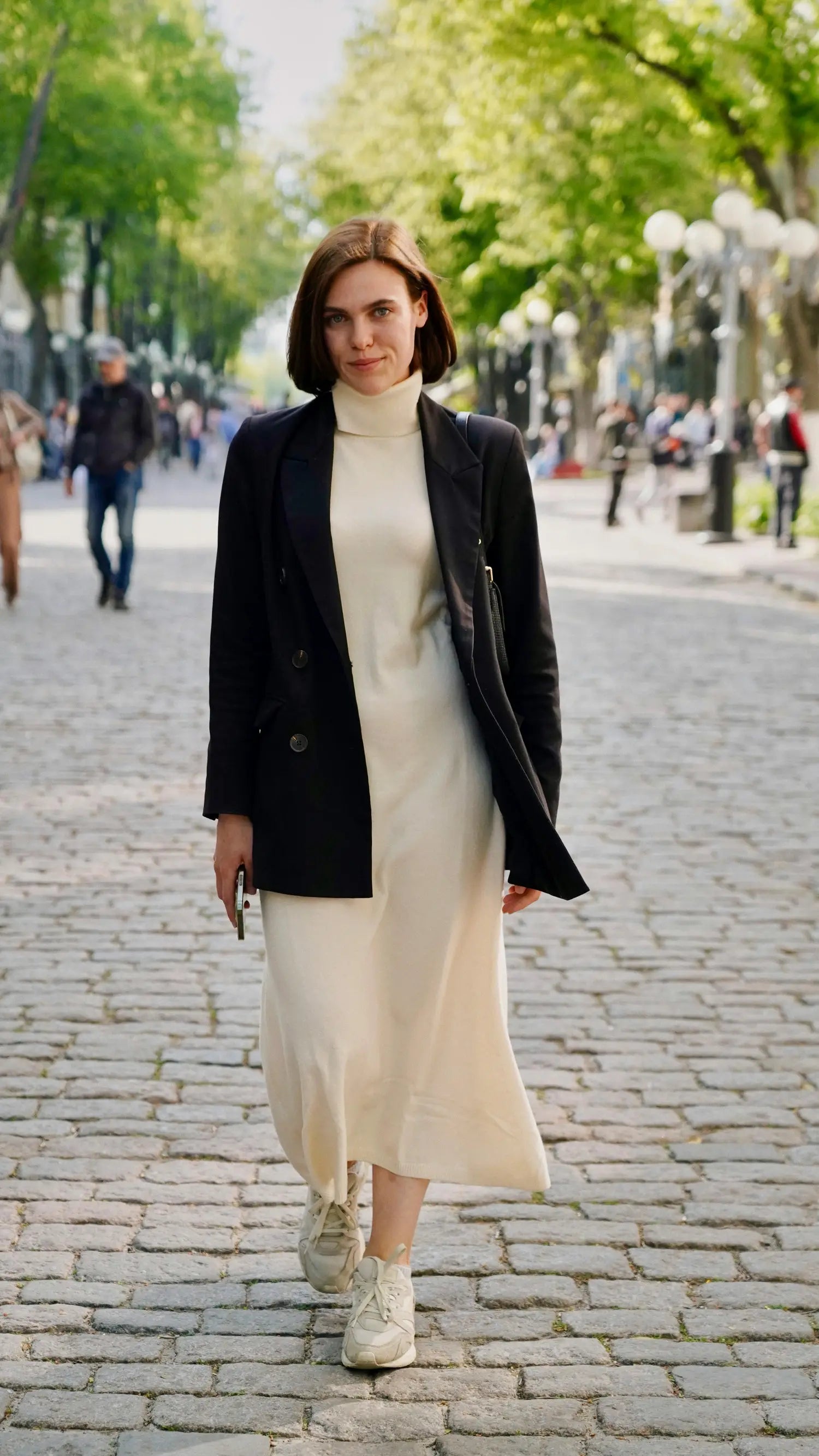
Use outerwear to unify or deliberately contrast an outfit. Pair cropped jackets with shorter hems, or long coats with midis, to create an elegant continuous line. Mix textures, for example a crisp trench with a soft knit, to add depth. Anchor the palette with a neutral pair of sneakers, echo an accessory colour from a print, and introduce one contrasting texture, such as suede or a metallic detail. Tune each look to the occasion with simple swaps: opaque tights and a structured blazer for polish, or a lightweight anorak and a backpack for commuting. Keep a short checklist—silhouette, sneaker profile, accessory scale, outerwear length, and a colour anchor—and maintain clean footwear to preserve the overall impression.
Pairing dresses with trainers hinges on proportion, material, and colour, not luck. Low-profile trainers preserve the vertical line of midis, while chunky soles anchor minis and balance voluminous skirts. Match materials, and repeat a trainer colour in your bag or other accessories to tie the look together and keep outfits deliberate.
Audit each element of a look using the five headings: silhouette and material, balance, colour and texture, accessories and outerwear, and outfit building. Try the suggested swaps, then run through the quick checklist to test combinations from the high street or your wardrobe. You will step out in outfits that feel purposeful, comfortable, and ready for the day.