
How to Clean Canvas, Faux Leather, and Knitted Vegan Trainers Gently, Step by Step
Trainers often combine canvas, faux leather, and knitted uppers, with each material responding differently to water, detergents, and abrasion. Using the wrong cleaning method can cause colour bleed, shrinkage, or loss of texture, turning a routine clean into lasting damage.
Follow this step-by-step guide to identify materials and test for colourfastness, carry out daily care to prevent stains, and gently clean different upper types to remove dirt without causing damage. It also explains how to dry and reshape soles, protect finishes, store trainers correctly, neutralise odour, and recognise when to seek professional repair, so your trainers last longer and remain wearable.

How to check materials and test colourfastness for trainers
Read the care label, then inspect the shoe’s construction. Identify the upper material, lining, sole, and fastening type, and check whether seams are stitched or glued. Note any embellishments, exposed foam, or bonded trims, as these will affect which cleaning methods are safe. Flex the upper and look for cracking or delamination on faux leather, thinning or loose yarn on knitted uppers, and heavy dye or surface stains on canvas that are likely to bleed. Do a spot test in an inconspicuous area: press a clean white cloth dampened with water against the surface. If no dye transfers, repeat the test using a cloth dampened with diluted mild detergent. Any visible dye on the cloth indicates a risk of colour bleed with water-based cleaning, so choose gentler or specialist methods for that material.
Test absorbency on an inconspicuous area by applying a few drops of water and watching whether the liquid beads or soaks in. Beading indicates a protective finish; quick absorption suggests the material will take up cleaners and may shrink or discolour. Note your results and use them to tailor your cleaning approach: colourfast, non-absorbent uppers, such as coated canvas or treated leather found on many sneakers, can tolerate gentle wet cleaning, whereas bleeding dyes, glued seams, or delicate knit structures call for spot cleaning, supportive shaping, and low-moisture methods. When unsure, favour the gentlest option and protect structural elements, taking extra care around seams, glued trims, and exposed foam.
Wear soft joggers when testing and cleaning shoes.

How to prevent stains: daily care for your trainers
After each wear, remove surface grit: use a soft-bristled brush on canvas and knitted uppers, and a damp microfibre cloth on faux leather. Brush outward to prevent abrasive particles embedding in the fibres, which reduces long-term wear and staining. Blot spills immediately rather than rubbing them. For oil-based stains, sprinkle cornflour or talcum, leave to absorb, then brush the powder away. Unlace and open the tongue, stuff trainers with scrunched paper, and dry them in a shaded, well-ventilated spot to draw out moisture, limit odour, and prevent dye bleed.
Store trainers in breathable conditions, away from direct sunlight and damp. Sunlight fades colour and weakens adhesives, while damp encourages mould and odour. Use shoe trees or recycled paper to retain shape and prevent creasing, and keep pairs separate to avoid wet colour transfer between different fabrics and finishes. Keep a compact care kit for everyday touchups: a soft brush, microfibre cloths, a mild, pH-neutral cleaner, and a white rubber eraser for scuffs. Always patch-test any cleaner on an inconspicuous area to check for discolouration before treating visible panels. These simple routines reduce the chance of stains setting and help preserve the appearance and lifespan of canvas, faux leather, and knitted trainers.
Choose breathable, pre-shrunk joggers for post-cleaning comfort

How to clean canvas, faux leather, and knitted uppers
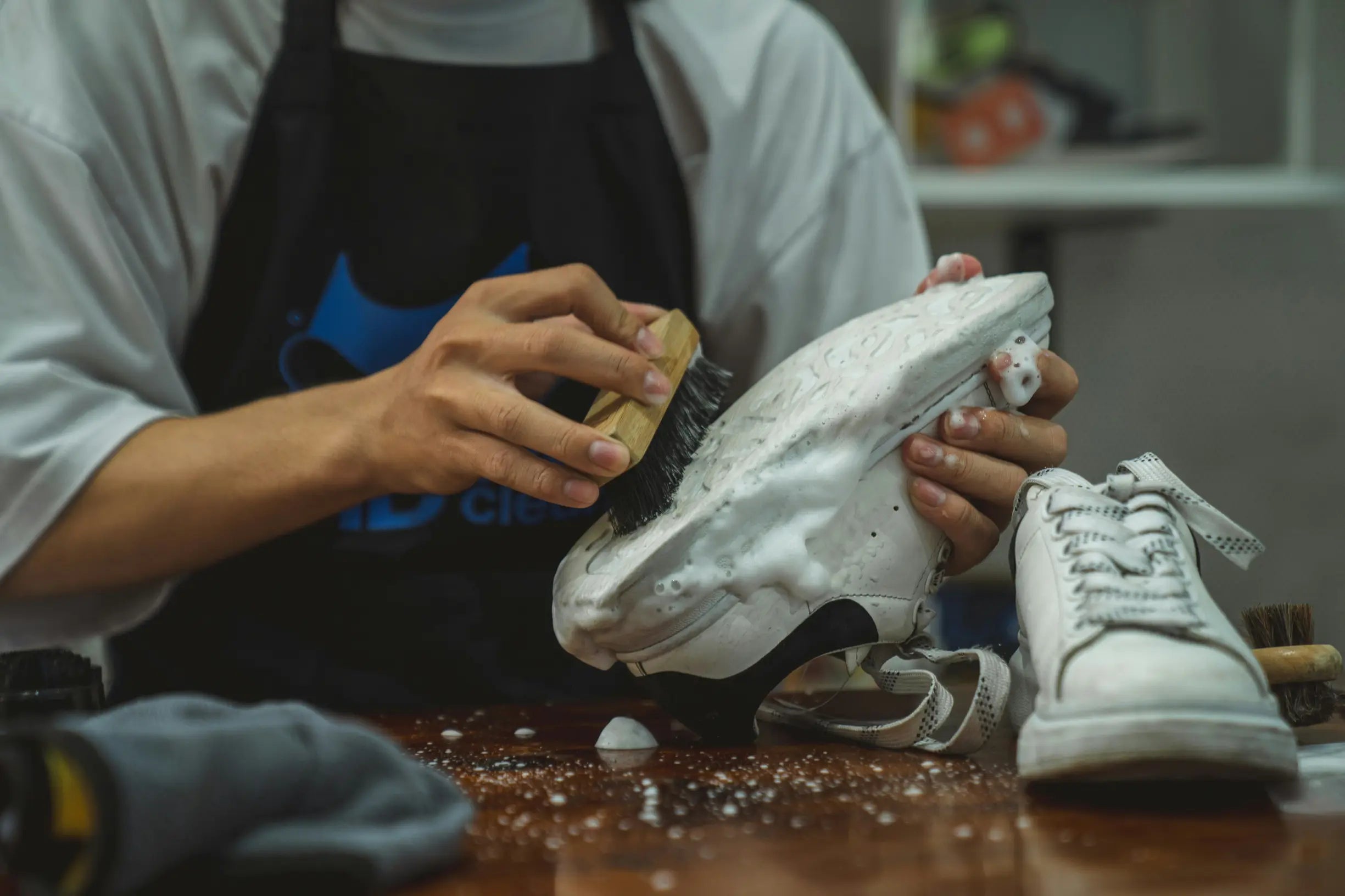
For canvas trainers or sneakers, start by removing the laces and insoles. Dry-brush loose dirt with a soft-bristled brush, then perform a colourfastness test on an inside seam: dab a little diluted mild detergent with a white cloth and check for any dye transfer to avoid discolouring linings. To treat stains, mix a small amount of mild liquid detergent with water and work it into the mark with a soft brush. For greasy spots, make a paste of bicarbonate of soda and water, apply it to the stain, and use gentle abrasion to lift oil. Wipe away soap with a clean, damp cloth, then blot with a white towel to reduce water rings. Allow the fabric to air between treatments so you can reassess the stain as it lightens.
For faux-leather uppers on sneakers and trainers, wipe with a soft cloth dampened in a pH-neutral soap solution. Avoid saturating seams. Remove scuffs by gently rubbing with a soft eraser or a damp microfibre cloth, then buff dry to restore sheen. If you plan to use a conditioner, test it on a hidden area first, since some products can affect adhesives or colour. For knitted uppers, sponge small sections with diluted detergent, rinse by dabbing rather than soaking, and reshape while damp by stuffing the toe and heel with scrunched paper to hold form. Dry footwear flat in a well-ventilated, shaded spot, away from direct heat and sunlight. Rotate pairs to allow moisture to evaporate between wears, and spot-clean fresh marks promptly. Apply a fabric-safe water repellent only when completely dry, and store in breathable bags to reduce trapped moisture and odour.
Quick-clean checklists for canvas, faux leather and knitted uppers
- Prep and safety checks: remove laces and insoles, dry-brush loose dirt with a soft-bristled brush, perform a colourfastness test by dabbing diluted neutral detergent on an inside seam with a white cloth, and gather essentials such as a soft brush, microfibre cloths, neutral soap, bicarbonate of soda, and a soft eraser.
- Canvas: work a small amount of mild liquid detergent in water into stains with a soft brush, treat greasy marks using a paste of bicarbonate of soda and water with gentle abrasion, dab away soap with a clean damp cloth, blot with a white towel to reduce tide marks, and let the fabric air between treatments to reassess.
- Faux leather: wipe with a soft cloth dampened in a neutral pH soap solution without saturating seams, remove scuffs by gently rubbing with a soft eraser or damp microfibre, buff dry to restore sheen, and test any conditioner on a hidden area because some products can affect adhesives or colour.
- Knitted uppers, drying and storage: sponge small sections with diluted detergent and rinse by dabbing rather than soaking, reshape while damp by stuffing the toe and heel with scrunched paper, dry flat in a well ventilated shaded spot away from direct heat or sunlight, apply a fabric-safe water-repellent only when completely dry, and store in breathable bags to reduce trapped moisture and odour.

How to dry, reshape, and protect your sneaker soles
Dry trainers in a well-ventilated, shaded place with the insoles removed. Stuff knitted uppers with crumpled paper or a clean, dry cloth to absorb moisture and preserve shape; this reduces the risk of shrinkage and mildew. Keep trainers away from direct heat such as radiators, tumble dryers, or hairdryers, because heat can soften sole glue, warp rubber, and shrink synthetic fibres, causing permanent distortion. Before reshaping, clean sole grooves and edges with a stiff brush and mild detergent. Pat them dry to remove grit and residue that could transfer onto the upper while the trainer dries.
Dry the shoes completely. Apply a thin, even coat of a neutral rubber conditioner or a silicone-based spray to restore flexibility and repel moisture, and test first on an inconspicuous area to check for discolouration. Fit temporary sole protectors or sticky tread patches to high-wear zones to extend lifespan and improve grip. Inspect the soles for delamination; if the edges lift, press them together and clamp with a suitable shoe adhesive. Allow any repair or coating to cure fully, following the product instructions, before wearing the trainers.
Wear relaxed joggers while trainers dry for comfortable upkeep.

How to store trainers, neutralise odour, and know when to seek professional care
Keep trainers dry and well ventilated, not trapped in sealed plastic. Preserve their shape with shoe trees or acid-free tissue, and place silica gel or charcoal sachets nearby to reduce moisture, because trapped damp encourages mould and persistent odour. To neutralise smells, remove and air the insoles, sprinkle bicarbonate of soda, or leave activated charcoal sachets inside overnight, then shake or vacuum out any residue. These absorbents cut volatile compounds produced by bacteria, though they may not reach microbes lodged deep in the midsole. Prevent problems by rotating at least two pairs so each can dry fully between wears, cleaning off mud and debris promptly, and using moisture-wicking liners to reduce sweat transfer and early odour formation.
Recognise when to seek professional care: persistent odour after home treatments, set-in stains, delaminating soles, or fragile finishes all warrant expert attention. Specialists can deep-steam or solvent-clean, reattach soles, replace insoles, and apply repairs and protective treatments that household methods cannot replicate safely. Before storage or a repair visit, prepare trainers by removing laces and insoles, giving a gentle surface clean and a full dry, and photographing problem areas; these steps speed up assessment, protect delicate finishes, and create a record if further repair proves necessary.
Treat each trainer according to its materials; start with a spot test in an inconspicuous area, then clean with low-moisture methods such as a barely damp cloth or soft brush to avoid dye bleed, shrinkage, and surface loss. Make care part of your routine: regular, gentle cleaning, air-drying away from direct heat, and reshaping with newspaper or shoe trees preserve appearance and reduce the need for repairs.
Follow the "check materials and test for colourfastness" guidance, daily care tips, and the step-by-step cleaning, drying, protection, and storage sections to choose the safest approach for each pair. Test first to prevent dye transfer, dry carefully to reduce the risk of sole delamination, and use regular airing and cleaning to stop lingering odour, keeping trainers wearable for longer and cutting waste.
How do I check what my trainers are made of and whether the colours will run?
Read the care label and inspect the upper, lining, sole, and seams, looking for glued trims, exposed foam, or delicate knits; flex the material to spot cracking or thinning. Carry out a spot test by pressing a white cloth dampened with water, then with diluted mild detergent if water shows no transfer; any dye on the cloth means avoid wet cleaning and use lower‑moisture methods.
What simple daily habits prevent stains and odour?
Remove surface grit after each wear with a soft brush for canvas and knit, or a damp microfibre for faux leather, blot spills immediately, and lift oil with cornflour or talcum before brushing away. Unlace and air trainers with scrunched paper inside, rotate pairs to let them dry fully, and store in breathable conditions with silica or charcoal sachets to reduce moisture and smells.
How should I clean canvas, faux leather, and knitted uppers differently?
For canvas, work a mild detergent solution in with a soft brush, use a bicarbonate paste for greasy marks, then dab away soap and blot to reduce tide marks. For faux leather, wipe with a neutral pH soap on a soft cloth without saturating seams, remove scuffs with a soft eraser or microfibre, and buff dry; test conditioners first. For knitted uppers, sponge small sections with diluted detergent, rinse by dabbing rather than soaking, and reshape while damp by stuffing the toe and heel with paper.
What is the safest way to dry, reshape, and protect soles?
Dry trainers flat in a well ventilated, shaded place with insoles removed and the uppers stuffed to hold shape, avoiding radiators, tumble dryers, or hairdryers. Clean sole grooves and edges before drying, then apply a thin coating of a neutral rubber conditioner or silicone spray only after testing on an obscured area, and clamp any delaminated edges with suitable adhesive to cure fully before wearing.
When should I get professional help instead of cleaning at home?
Seek professional care if odour persists after home treatments, stains have set, soles delaminate, or finishes are very delicate, because specialists can deep clean, re‑adhere soles, replace insoles, and apply solvent or steam treatments safely. Prepare trainers by removing laces and insoles, giving a gentle surface clean and full dry, and photographing problem areas to speed assessment.