
Article: Top 10 Trouser Lengths to Pair with Low-Top White Trainers
Top 10 Trouser Lengths to Pair with Low-Top White Trainers
Low-top white trainers are a wardrobe staple, but the wrong trouser length can undo an otherwise sharp outfit. A micro-crop that exposes the ankle reads casual and sporty, while a full-length hem that skims the shoe creates a longer, more polished line. Even a few centimetres of difference in hem height can shift proportion, balance, and formality.
This guide breaks down ten distinct trouser lengths, showing how each interacts with low-top white trainers so you can choose cuts that flatter your shape and suit the occasion. Expect practical tips on proportion, styling tricks for cropped and full-length silhouettes, and simple tailoring tweaks to maximise the trainers' versatility.

1. Show off your ankles: pair micro-crop trousers with trainers
Aim for the hem to sit about 1 to 3 centimetres above the ankle bone. Stand tall and take a step to check that the hem does not ride up or expose too much leg when you walk; this keeps the cropped look deliberate. Choose cuts that complement the ankle reveal: tapered or slim cigarette trousers create a neat, elongated line, while wide cropped trousers offer a modern contrast. Remember that heavier fabrics hold their shape and may need a slightly wider cut than lightweight linens or denim. Match crop width to your proportions: favour narrower, tapered crops if you have shorter legs, and experiment with higher or wider micro crops if you are taller. Pair cropped trousers with structured tops or blazers to maintain balance, or with trainers, sneakers, or high tops for a relaxed, contemporary finish.
Plan an underfoot strategy to control visual weight: go no-show, choose low-rise liners that match your skin tone or the trainer colour for a seamless break, or wear thin dress liners in a coordinating shade for smart-casual looks. Keep your trainers clean to preserve the crisp contrast with cropped trousers, so the ankle line reads deliberate rather than accidental. Finish hems with intent: opt for a neat turned hem or a precise raw edge that lies flat, and avoid heavy cuffs that add bulk at the ankle. When having trousers altered, ask your tailor for a slight taper at the hem, then sit, stand, and walk after the alterations to confirm the fall and comfort remain correct.

2. Keep it sleek: cropped trousers, bare ankles, and trainers
Let the hem fall at or just above the ankle bone so a centimetre or two of skin shows when you stand in trainers. Walk to check the trousers do not ride up or bunch. Choose tailored cropped trousers, slim chinos, tapered joggers, or narrow straight legs to maintain a clean line to the trainer, keeping the ankle visible to create a visual break that lengthens the leg. Steer clear of wide, voluminous cuts, which obscure the ankle and flatten the silhouette.
Use no-show or low-cut liners to emphasise the bare ankle, or choose a thin patterned ankle liner to sit intentionally above the hem as a focal point. Match liner tones to your trousers for continuity, or to your trainers for contrast, depending on whether you want a subtle or eye-catching finish. Choose mid-weight fabrics with enough structure to hold a crisp hem, press or stitch hems neatly, and avoid heavy materials that collapse over the trainers. To flatter different body types, select a slightly higher rise to visually lengthen the leg, balance cropped trousers with a longer top or simple layers to create measured proportions, and keep the ankle opening narrow to preserve a sleek silhouette.

3. Pair ankle-grazing straight-leg jeans with low-top trainers for a modern, effortless finish
Ankle-grazing straights sit to kiss the top of low-top white trainers, revealing a narrow sliver of ankle, just a few millimetres that keep the line neat and intentional and maintain balanced proportions. Choose mid-weight wool or cotton twill for a clean fall, denim or heavier cotton for more structure, and finer linen for a softer drape, because heavier weights help the leg hold a straight silhouette and prevent unwanted stacking. Aim for that precise length rather than relying on temporary cuffing, and have a tailor adjust hems for a permanent, considered finish.
Finish the hem intentionally with a clean blind stitch or a narrow turn-up to maintain a sharp edge and prevent long breaks or excessive bunching at the ankle. Opt for invisible, no-show liners to elongate the leg and keep focus on the trainer, or choose a slim patterned liner to introduce a subtle point of interest where trouser meets shoe. Balance the outfit with cropped jackets, tucked shirts, or slightly oversized tops to regulate visual weight, and keep proportions coherent so the ankle-grazing line reads intentional. Keep white trainers immaculate; scuffs create a high-contrast interruption at ankle level and quickly change the perceived neatness of the look.

4. Choose tailored ankle-length trousers for a polished finish
Set the hem so it sits just above the ankle bone, keeping the trainer profile visible. Stand naturally while the tailor marks where the trouser clears the shoe by about 1 to 2 centimetres, then walk to confirm the hem does not ride up or catch on the heel — this preserves a clean line. Choose a tapered or straight-leg cut with a narrow hem to create a crisp fall around the trainer, and ask your tailor for a blind hem or a slight taper rather than a wide cuff so fabric does not pool. Opt for mid-weight fabrics, such as wool blends or cotton twill, that hold their shape and resist flaring over the shoe. Bring the trainers and any liners or insoles you plan to wear to the fitting, and test a temporary basted hem, checking the trouser both at rest and in motion.
Pair tailored ankle trousers with a structured blazer or a fitted shirt to keep proportions sharp, or team them with a relaxed top for a modern, intentional contrast that still showcases the trainers. Reveal a small section of ankle to slim the silhouette, and factor in ankle coverings when deciding trouser length. Prefer low-profile or invisible liners to maintain a clean hem, or choose a visible ankle covering in a complementary colour or subtle pattern to add personality. At the fitting, ensure the side seams hang straight and the hem lies flat so alterations deliver a consistently polished finish.

5. Pair cropped wide-leg trousers and culottes with low-top trainers
Choose the crop height deliberately, stopping the hem just above the ankle bone so a sliver of skin or a no-show liner appears. That narrow break visually lengthens the leg, while a hem that falls over the trainer shortens the silhouette. Balance structured culottes with chunkier soles, and pair softer, drapey wide legs with slimmer soles to avoid a bottom-heavy effect. Use the colour of your ankle covering to control where the eye lands: no-show or skin-toned liners extend the leg line, matching the covering to the trouser creates a seamless column, and a contrasting colour draws attention to the ankle for a playful finish.
Define the waist and upper proportions by tucking in your shirt, adding a belt, or choosing a cropped jacket to counterbalance wide legs. Before making permanent alterations, adjust the hem and test movement. Try pinning the hem, creating a small cuff, or adding a slight taper to prevent fabric pooling over your trainers; when fabric covers the shoe, it adds visual weight and shortens the leg. Check the trousers while walking and sitting to ensure they sit cleanly and the trainers remain visible. These tweaks let you control perceived leg length and overall balance.

6. Style trainers with cropped flares for a contemporary, airy silhouette
Aim for a hem about 3 to 6 centimetres above the ankle bone so the trainer collar and a slim band of skin remain visible; this prevents fabric pooling and keeps proportions balanced. Ask a tailor to shorten the trousers while preserving the original flare, and raise the front hem slightly so the toe box sits cleanly on the trainer without dragging at the back. For foot coverings, choose no-show liners for a streamlined finish, low-ankle styles in a matching colour for discreet coverage, or a contrasting crew-length option as a retro accent, and avoid any bulk at the shoe opening.
Choose midweight denim, crepe, or soft suiting that holds the flare without collapsing over the trainers. Avoid fabrics that are overly stiff or too flimsy, as they will obscure the shoe silhouette. Balance cropped flares with a cropped jacket, a tucked-in top, or a defined waist so the eye is drawn to the trainers and the overall silhouette stays intentional. When trying garments on, check movement, sit-to-stand transitions, and how the hem behaves at the back to ensure no dragging or bunching. These small adjustments, paired with low-profile liners and the right fabric, keep the trainers the deliberate focal point of the outfit.

7. Wear full-length, no-break trousers to elongate your legs
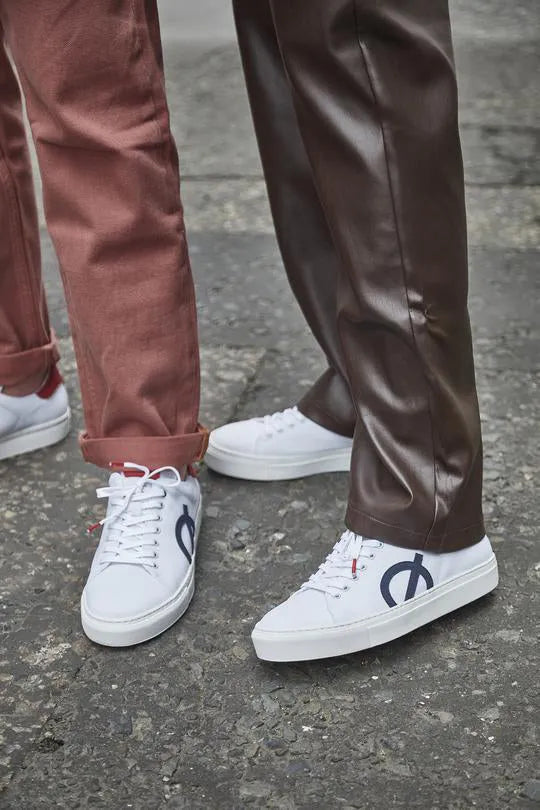
Have your trousers hemmed so the front hem just grazes the top of your trainers, without any break, forming a continuous vertical line from hip to shoe that visually lengthens the leg. Use a narrower hem and a gentle taper through the calf to reduce ankle bulk and stop the foot appearing wider. Choose mid-weight fabrics with good drape, such as structured wool or cotton blends, so the leg sits straight over the shoe instead of bunching.
Choose low-profile liners or shades that match your skin or trousers to maintain an uninterrupted line down the leg. Favour a higher-rise waist to increase the leg-to-torso ratio and balance the longer line created by a no-break hem. Coordinate tops and outer layers in similar tones to avoid horizontal breaks that shorten perceived leg length. Keep trainers clean, because scuffs and dirt draw the eye downward and weaken the elongating effect.

8. Leave a subtle break at the hem of full-length trousers for natural movement
Aim for a purposeful 1 to 2 cm break at the front of the hem when standing so the trouser meets the top of a low-top white trainer without covering the tongue or dragging on the ground. Test the length in motion: walk, sit, and climb stairs to see how the hem behaves. A good slight break follows the leg, drapes smoothly over the shoe vamp, and avoids excessive bunching at the ankle or heel. Get trousers tailored while wearing the trainers you intend to pair them with, and ask the tailor to pin for a slight break while leaving a small cuff allowance so you can adjust later if you change shoe profile or ankle height.
Factor fabric and cut into your hem decisions. Heavier wool and denim create a fuller break, so shorten by about 1 cm compared with lightweight cotton or linen, while tapered legs need less length to maintain a neat line. Treat a slight break as a styling tool: it preserves a smart silhouette, reveals trainer detail, and can lengthen the leg when paired with a moderate taper. Control formality through choice of footwear, cuff width, and trouser rise, so the same break can read casual or smart. Leave an alteration allowance, and test the hem with the trainers and shoes you plan to wear, so adjustments remain straightforward as your footwear or preferences evolve.

9. Embrace the trouser break to sharpen timeless tailoring
The classic single break is a small fold where the trouser hem lightly rests on the trainer vamp, producing roughly 1 to 2 centimetres of fabric pooling. It preserves a tailored silhouette while accommodating the thicker sole of low-top trainers, creating a continuous fall from hip to toe that reads neat on camera and in person. When fitting, stand in the trainers you plan to wear, pin the hem to form the single break, and measure the finished length in centimetres. Walk and sit to check how the break moves, then have the hem set with a pressed crease rather than a raw edge, and allow for the trainer sole height so the break survives daily wear. Choose medium-weight weaves, such as worsted wool or midweight cotton, for a stable, tidy fold, and avoid lightweight linens that lose definition. Bear in mind that tapered legs give a minimal break, while straighter legs produce a more pronounced fold.
Use the single break to reinforce tailored lines: pair it with slim or straight trousers, reveal the ankle with low-cut or no-show liners, or match liner and trouser tones to visually extend the leg. For a slightly more casual take, roll the hem once, but retain the single break for formal or smart-casual outfits. Maintain the break by pressing the crease regularly, resetting the hem when it drifts, and asking for a blind hem or light hand stitching so the fall stays smooth. Well-maintained hems reduce fabric pooling and preserve proportion, helping low-top trainers sit cleanly alongside tailored trousers in photos and everyday wear.

10. Taper your joggers and track trousers to frame trainers
Make tapered joggers and track trousers work by narrowing the leg from knee to ankle so the hem sits just above the trainer collar or lightly grazes the top. That reveal shows the shoe profile and prevents excess fabric pooling. Control fabric at the ankle with neat elasticated cuffs, a single turn-up, or a tailored cropped hem: elasticated cuffs hold fabric during movement, a small turn-up gives a deliberate casual finish, and a cropped hem reads smarter when you need to elevate the look. Favour mid-weight cotton, twill, or technical blends with slight structure so the trousers keep their line and the trainers remain the focal point.
Frame white trainers with contrast, or choose tonal shades for a streamlined look. If any gap between trouser and trainer reveals fabric, pick a deliberate colour or texture to bridge them. Do practical checks: walk, sit, and climb stairs to confirm cuffs stay put and fabric does not bunch over the trainer. Try different hem heights in motion to ensure the trainer profile remains visible from common sightlines. For smarter occasions, replace tapered joggers with cropped, tapered chinos at the same hem height to preserve the trainer-forward silhouette while keeping the look refined.
This guide examines ten trouser lengths and how each alters proportion, balance, and formality when paired with low-top white trainers. Small changes to hem height, fabric weight, and ankle coverage shift how the trainers sit within an outfit, so considered cuts and simple tailoring create cleaner silhouettes and more versatile looks.
Use the heading-led tips to test lengths in motion: stand, walk, and sit. Bring the trainers and the hosiery you plan to wear to fittings, and ask your tailor for small adjustments that preserve the shoe profile. Try several recommended lengths, note how each shifts proportion, and choose the ones that consistently flatter your shape and suit your everyday outfits.