
How to Clean Vegan Trainers Safely, by Material and Stain Type
Stains, scuffs and the elements shorten the lifespan of vegan trainers, leaving them looking tired fast. Cleaning them the wrong way can warp faux leather, lock pigments into woven fabrics or strip protective finishes. Knowing which material you are treating makes all the difference.
Master how to identify materials, match stain treatments to the right fabric or synthetic uppers and assess condition before you begin, helping you steer clear of common mistakes. Work through the tailored steps for cleaning, storing and simple repairs to keep your trainers hygienic, extend their lifespan and preserve their appearance.

How to identify materials and assess their condition
Begin by identifying materials using sight and touch. Synthetic leather feels smooth with a slightly plastic surface; microfibre is fine and suede-like; canvas shows woven threads; mesh has an open knit; faux suede has a napped texture. At an inconspicuous edge, press a fingernail and examine cut fibres to confirm whether the upper is textile or a man-made polymer. Before cleaning, inspect construction and likely weak points: scan seams, glue lines, sole joins, heat-bonded logos and inner linings for separation, fraying or delamination, and gently flex the trainers to reveal gaps. Photograph any problem areas so you can monitor changes after cleaning, and remove laces and insoles to clean those components separately.
Before cleaning trainers or high tops, perform a colourfastness and finish test in a hidden area such as inside the tongue or under the heel. Apply a small amount of the intended cleaner to a white cloth and blot rather than rub. Watch for dye transfer, discolouration or surface tackiness and, if colour bleeds or the finish reacts, switch to a milder water-based method. Catalogue stains so you can treat them in the correct order. Recognise common markers: oil or grease shows as a dark, glossy patch; salt appears as white crystals; mould as fuzzy spots with a musty odour; and ink as sharp dark marks. Treat oil and grease before water stains to avoid spreading them. Run a compatibility and safety check by reading the care label. Avoid strong solvents and high heat on polymer materials, which can soften or lift. Favour neutral pH cleaners, microfibre cloths and soft-bristled brushes, and ensure good ventilation and gloves when using stronger products.
Choose a garment‑dyed tee built for routine care.

How to tackle stains with the right method for each material
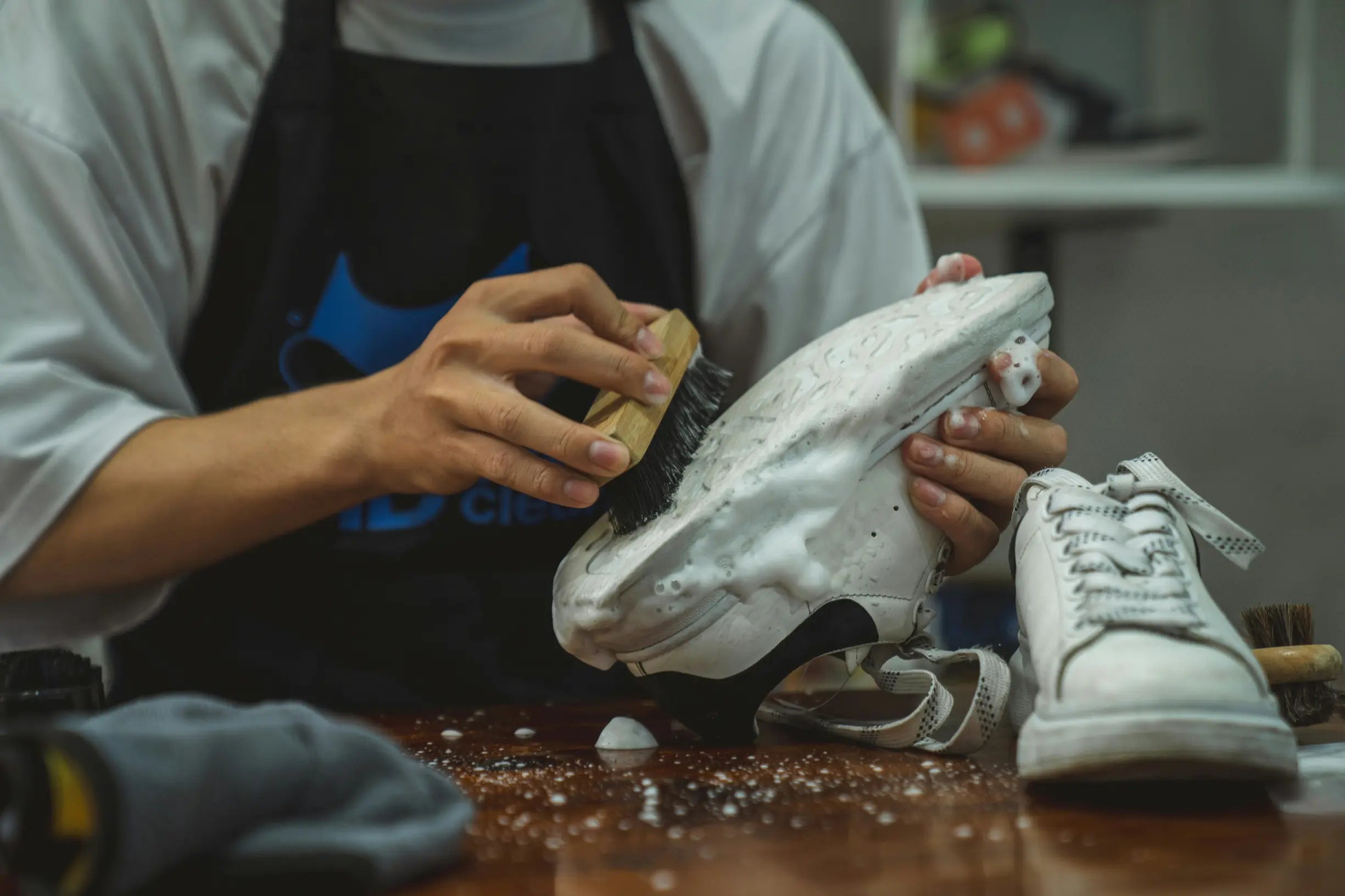
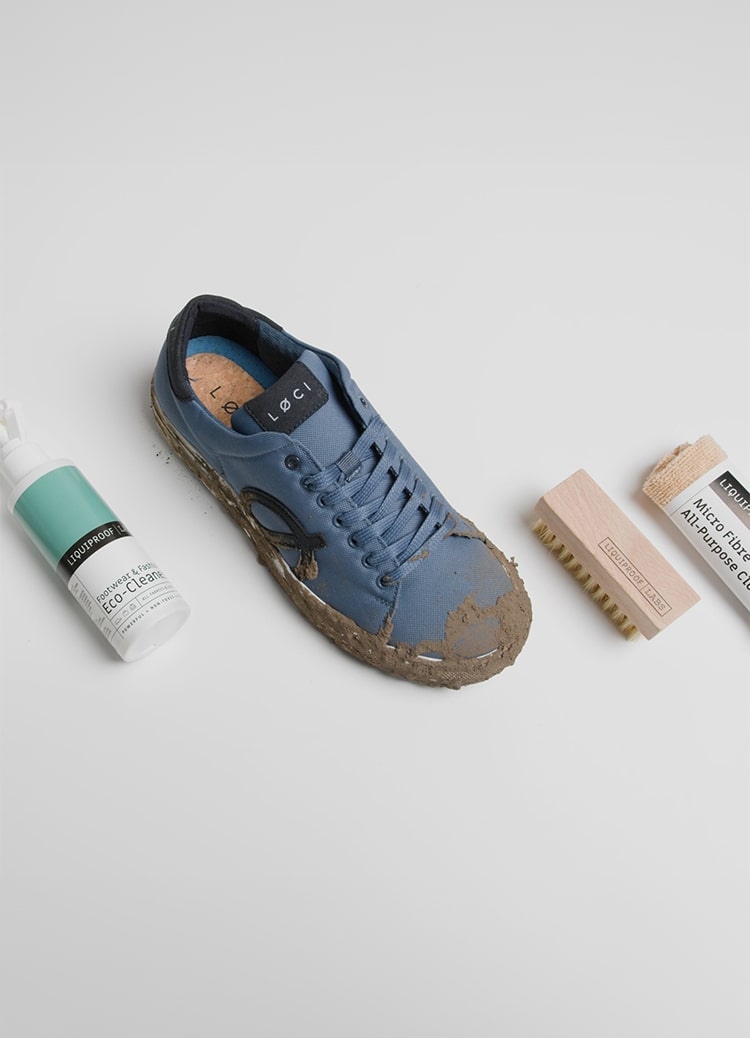
Care for vegan trainers by matching the method to the material. Wipe vegan leather with a microfibre cloth and mild soap without soaking. Brush and spot-clean canvas, and treat knit or mesh gently to avoid fraying. For suede-like microfibre use a soft brush or suede eraser, and clean rubber soles separately to prevent dirt transfer. Some finishes will swell or lose colour with excess water, while open weaves trap grit that needs gentle agitation to lift, so choose your approach accordingly. Keep a small home kit stocked with a soft-bristled brush, a soft toothbrush, microfibre cloths, a melamine sponge, plain detergent without bleach, white vinegar, bicarbonate of soda, cornflour or talc, rubbing alcohol and an enzyme stain remover. Always test any solution on an inconspicuous area first.
Keep trainers and sneakers in good shape with a few simple habits and spot treatments. Let mud dry, then brush it away to avoid smearing. For oil and grease, sprinkle cornflour or bicarbonate of soda to absorb the stain, then lift with a mild detergent. For ink, patch-test an alcohol swab before using it on the mark. Treat blood with cold water and an enzyme cleaner, since enzymes break down protein stains. After cleaning, blot away excess moisture, stuff trainers with paper to retain their shape and air-dry them away from direct sunlight and heat, gently reshaping whilst damp. Only apply a suitable waterproofing or protective spray after testing it on a hidden area. To reduce the need for heavy cleaning, remove surface dirt promptly, rotate pairs to allow airing, wash or replace insoles regularly, and tackle salt or road grime with a diluted white vinegar solution to prevent staining.
Keep a compact kit for quick, gentle sneaker care.

How to store, repair and prevent future damage to your trainers
Simple storage choices protect your trainers. Keep them in breathable conditions rather than airtight boxes, and support the toe box with shoe trees or scrunched paper. Trapped moisture and compressed uppers invite mould and permanent creasing, while good airflow and structural support preserve shape and slow material breakdown. Control humidity with desiccant sachets or by storing trainers in a dry, well ventilated cupboard, since damp conditions accelerate microbial activity and adhesive failure. Reducing moisture lowers odour and cuts the risk of sole delamination.
Keep your trainers, sneakers or high tops moving with simple, effective repairs. For separated soles and loose panels, use a polymer-compatible adhesive and lightly abrade the mating surfaces to improve mechanical grip and remove oils that prevent a good bond. Clamp the joint while the adhesive cures to produce a stronger, longer lasting repair. Patch small tears and scuffs in fabric or synthetic uppers by sewing from the inside with nylon thread, or apply a flexible patch that matches the upper's elongation. Avoid rigid fixes, which concentrate stress and can cause new failures. To prevent future damage, rotate pairs, replace insoles and laces when they show wear, and treat uppers with a compatible water-repellent or stain-resistant finish after carrying out a small spot test. For complex sole or structural work beyond a DIY repair, consult a professional cobbler or shoe repairer.
Caring for vegan trainers starts with matching your cleaning method to the material. Test a small, hidden area first, then tackle stains in the right order to avoid setting them. Blot rather than rub to prevent abrasion and pushing marks deeper. Use enzyme-based cleaners for protein stains such as sweat or food. Allow trainers to dry naturally, away from direct heat, to protect shape and glue. These small, material-specific steps preserve appearance, hygiene and structure.
See the sections on identifying materials, matching stain treatments, and storage and repair when a problem arises. Always test cleaning products in an inconspicuous area before treating visible surfaces. Routine care and correct repairs will extend the life of your trainers and reduce waste. Take a few minutes to assess, clean and store each pair properly.