

Top 3 Vegan Trainer Materials That Last Longest?
Choosing vegan trainers can feel like a choice between ethics and durability. With so many synthetic leathers and plant-based fabrics billed as sustainable, it can be hard to tell which materials will endure regular wear.
Discover the three most durable vegan trainer materials, learn how to match them to your activity, climate and values, and get practical care, repair and end-of-life strategies to extend lifespan and reduce waste.

1. Evaluate vegan trainer materials for long-term durability and performance
To assess a vegan trainer's lifespan, consult objective durability metrics on the material data sheet, such as Martindale or Taber abrasion cycles, tensile strength and tear resistance. Treat higher figures as indicators of greater wear resistance rather than relying on marketing claims. Different families of vegan material show distinct failure modes: microfibre often resists surface abrasion but can delaminate at seams; recycled PET typically offers high tensile strength but may fray at cut edges; plant-based leathers vary widely depending on coating adhesion and backing quality. Reading these data sheet figures alongside common failure patterns helps predict how trainers will age with everyday wear.
Construction often matters more than the upper material alone. When inspecting trainers, sneakers or high tops in person, look for dense, even stitching, reinforced heel counters, taped or bound seam edges, and a sole that is stitched or mechanically fastened rather than one held only with adhesive. Run simple at home checks: flex the trainer repeatedly to reveal any cracking in the upper or sole; rub a damp cloth across the surface to test coating adhesion; and check inside the tongue and collar for loose backing or thin padding, noting any failures so you can compare models objectively. Bear in mind environmental factors such as ultraviolet exposure, sweat, salt and abrasion accelerate degradation, so plan maintenance around them. Clean regularly with products suited to the material, use compatible protective sprays where safe, and rotate pairs to reduce cumulative wear and extend service life.

2. Choose materials that suit your activity, climate and values
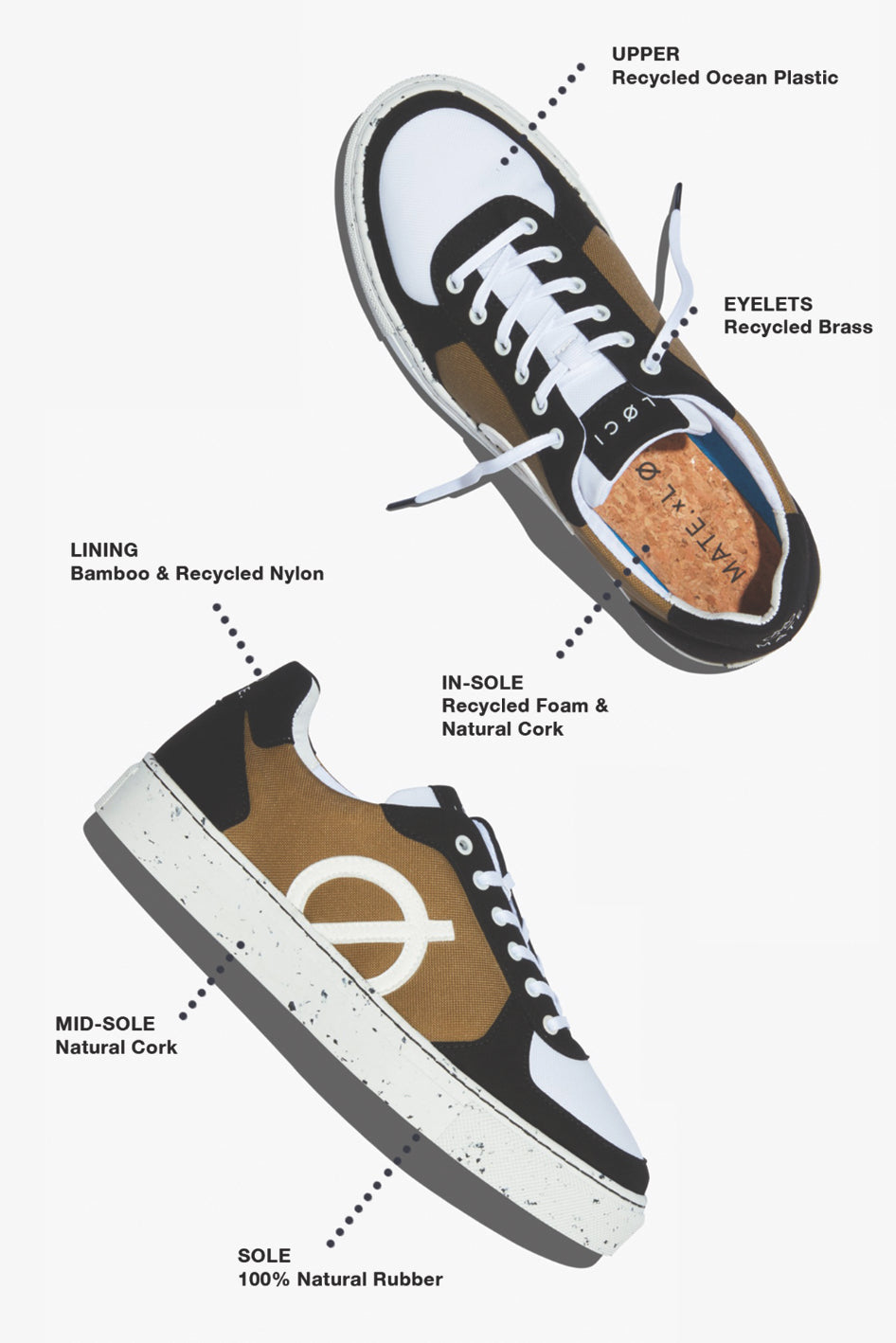
Choose uppers and soles that reflect how you move. Lightweight, highly breathable fabrics with flexible, abrasion-resistant overlays suit distance running; reinforced panels and lateral support work best for gym sessions or court sports; tougher weaves with more substantial soles resist repeated flexing for walking and travel. Factor in climate by favouring moisture-wicking fibres that dry quickly in hot, humid conditions, choosing low-absorbency coated microfibres and sealed seams with rubberised outsoles for wet weather, and opting for insulative liners combined with water resistance in cold, damp conditions. Match materials to your values by weighing end-of-life traits: plant-based leathers and natural fibres aid compostability, recycled synthetics reduce reliance on virgin plastic, and mono-material constructions make recycling and repair easier. Whether you are choosing trainers for everyday wear, high tops for added support, or lightweight sneakers for distance, let movement, climate and sustainability guide your choice.
Give trainers a quick durability check before you buy. Bend or scrunch the upper at key flex points to judge flexibility, inspect stitch density and seam placement, and examine how the sole is attached to distinguish glued joins from stitched ones. Look for deeper outsole tread, reinforced toe boxes and visible stitch lines or welted joins for easier resoling and a longer service life. Pick materials that tolerate straightforward maintenance such as surface cleaning, reproofing or conditioning, and favour removable insoles for faster drying and simple replacement. After wet use, remove grit, air dry away from direct heat and rotate pairs to let materials recover between wears. These simple steps help extend lifespan and preserve performance.

3. Extend your trainers' life with care, repair and end-of-life strategies
Blot fresh marks with a damp cloth. For microfibre or polyurethane uppers, clean with a mild, pH-neutral detergent, rinse gently, stuff with absorbent paper to maintain shape, and air dry away from direct heat or strong sunlight to help prevent polymer stiffening and adhesive breakdown. Make these habits part of your routine: rotate between pairs so midsoles can rebound, avoid storing wet trainers in closed bags, and use shoe trees or rolled paper to preserve shape. Fit heel protectors or thin sole savers on high-contact areas to reduce abrasive wear, and inspect trainers regularly so small problems do not worsen.
For minor damage, replace the insoles, stitch tears or use a flexible adhesive formulated for synthetics. Take badly worn soles to a cobbler for patching or resoling to restore grip and structure rather than discarding the trainers. Decide whether to repair or replace by checking sole thickness, midsole compression, delamination, open seams and whether a persistent odour or other structural faults remain after cleaning. When trainers truly reach the end of their life, repurpose the uppers into household items, donate clean but worn pairs to community projects, locate material-specific recycling streams or textile collection points, and record the material composition, since plant-based and synthetic components follow different recycling routes.
Choose vegan trainers by prioritising material and construction data rather than marketing claims. Look for Martindale or Taber abrasion cycles, tensile strength and tear resistance to judge long-term wear. Check visible seam and sole attachment quality and be aware of common failure patterns, for example microfibre delamination at seams, recycled PET fraying at cut edges, and plant-based leathers failing where coatings lose adhesion. When you can examine pairs in person, run simple in-store checks: flex key points, rub a damp cloth over coated finishes to test adhesion, and compare stitch density to assess reinforcement and build quality.
Choose trainers with uppers and soles suited to your activity and the local climate. Favour mono-material constructions and removable insoles to make repair and recycling simpler. Keep your trainers in service longer with a few straightforward habits: blot stains straight away, air dry rather than using heat, rotate pairs to even out wear, and use protective sprays that are compatible with the material. These small actions slow degradation and preserve performance. Fix simple faults at home where you can: replace worn insoles, stitch small tears, or use flexible adhesives for splits. For more serious work, consult a cobbler for resoling or professional repairs. When a pair truly reaches the end of its life, repurpose the uppers, donate any wearable trainers, or send materials to specific recycling streams so the value is retained and waste is reduced.