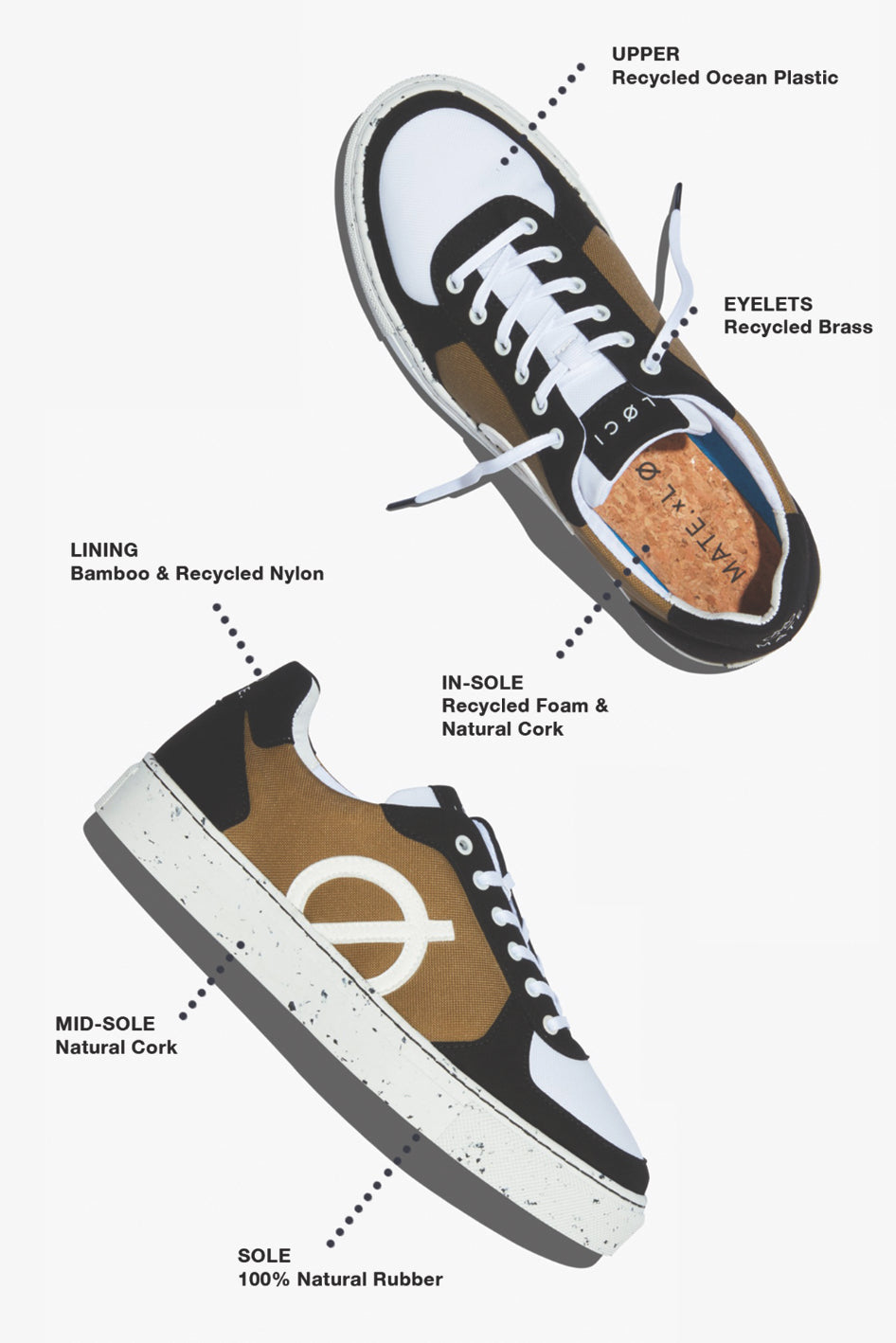


What are 10 practical checks to confirm trainers are vegan and sustainable?
Buying vegan trainers might seem straightforward, but labels and slick marketing can conceal important details. Knowing how to check materials, assess production practices and understand aftercare before you buy will help you avoid backing animal-derived materials or unsustainable manufacturing.
Ten practical checks to judge a pair of trainers for vegan integrity and sustainable manufacture. Scrutinise ingredient lists, verify recognised certifications, spot hidden animal-derived components and probe material origins. Learn how to assess factory conditions, durability and repairability, chemical safety, life cycle impacts and packaging, with clear steps to compare claims and make better choices.

1. Scrutinise labels and ingredient lists for genuine sustainability
Start by decoding labels and symbols: scan uppers, insoles, and linings for explicit terms such as leather, suede, wool, silk, casein, gelatin, or hide, and note synthetic signifiers like PU, PVC, microfiber, textile, or man-made materials. If listings use vague phrasing such as other materials, mixed materials, or unspecified trims, ask the retailer for a full component breakdown covering upper, lining, insole, sole, adhesives, and threads. Check for independent vegan certification or a written vegan claim, then read the certifier's scope to confirm whether the whole shoe, only the upper, or specific processes were assessed.
When assessing trainers or other footwear, probe less obvious animal sources by asking about glues, tanning agents, dyes, threads and foam fillings. Adhesives and tanning by-products can lurk in outsoles, insoles or bonding layers, so include these components in your enquiries. Check responses against sensory and visual cues: a uniform repeating grain, stamped print, plasticky smell or perfectly regular stitching usually indicates synthetics, whereas irregular pores, natural scars and a richer aroma point to animal leather. Combine these observations with the documented ingredient list to reach a reliable conclusion. If uncertainty remains, request labelling evidence or a material declaration from the supplier before deciding.
Add cushioned, breathable socks for trainer comfort

2. Verify recognised vegan and sustainability certifications for trusted credentials
Look for recognised vegan certifications such as the Vegan Society, Vegan Trademark and PETA Approved Vegan. These certifiers confirm a product contains no animal-derived ingredients and has not been tested on animals. Verify claims by checking for the certifier logo and certificate number, then search the certifier’s public database to ensure the exact product is listed. Check whether the certification applies at product level or company level, and review the certificate scope and expiry before accepting the claim. If anything is unclear, contact the certifier for confirmation.
Match sustainability certifications to specific shoe components. Look for GOTS and Fairtrade for organic fibres and fair labour standards; the Global Recycled Standard for recycled content and a clear chain of custody; OEKO-TEX and Bluesign for chemical safety in textiles; Cradle to Cradle for product circularity; and FSC for responsibly sourced natural rubber and cardboard used in soles and packaging. Verify legitimacy by checking the certificate ID on the certifier’s website, confirming that certification covers the finished product rather than a generic claim, tracing the chain of custody for recycled materials, and ensuring adhesives, dyes, linings and soles fall within the certificate’s scope. Be sceptical of vague eco language or retailer-only assertions. Ask for audit reports, supplier lists or direct certifier verification links so you can draw your own conclusions about a trainer’s or sneaker’s supply chain and material breakdown.
Keep sustainably certified sneakers fresh with biodegradable cleaning essentials.

3. Spot hidden animal-derived materials and adhesives in trainers
When checking whether a pair of trainers is genuinely vegan, start by scrutinising labels and material lists for explicit animal terms such as leather, suede, wool, silk, down, casein, gelatin, shellac, lanolin, keratin, hide glue, collagen or albumen. Flag any occurrence and seek clarification before accepting a vegan claim. Ask the retailer or manufacturer for technical documentation, for example a material safety data sheet, technical data sheet or supplier declaration. These documents often state whether adhesives and finishes are protein based or polymer based and may name synthetics such as polyurethane, acrylate, EVA or specific rubber compounds. Request a chain of custody or written supplier confirmation that adhesives, threads, dyes and trims were included in any vegan or sustainability certification, rather than assuming a label covers the whole trainer.
Carry out simple, non-destructive checks on trainers or sneakers to help identify materials. Use a magnifier to inspect cut edges: a uniform plastic cross section suggests a synthetic, while fibrous flesh, visible pores or hair follicles point to animal-derived material. Place a single water droplet on an inconspicuous spot to see whether the material beads or absorbs. Photograph any anomalies to support queries with suppliers. If you have an offcut, spare thread or a removable insole, you can consider a controlled burn test on scrap material only. Hold the scrap with tweezers and do this outdoors with appropriate precautions, because protein fibres tend to char, smell like burnt hair and leave brittle ash, whereas synthetic polymers usually melt, form hard beads and give off a chemical odour. Use the burn test sparingly, follow basic fire safety, and always verify that certifications explicitly exclude shellac, bone glue or other animal-derived finishes so the whole shoe is covered.
Choose certified vegan trainers in bio-leather and rubber

4. Ask where materials come from and demand feedstock transparency
Ask suppliers for the material declaration, the technical data sheet and the material safety data sheet. These documents list constituent chemicals, plasticisers and hazard codes, so you can confirm whether a material is synthetic, bio-based or contains animal-derived components. Request feedstock statements and chain-of-custody or recycled-content certification. Certificates and batch traceability reveal whether a material is virgin fossil-based, post-consumer recycled, post-industrial recycled or bio-based, and specify the percentage of recycled or bio-based content. Clarify whether any bio-based content comes from agricultural residues, non-food crops or purpose-grown food crops, and ask for sourcing statements that detail land-use claims and measures to avoid deforestation. This due diligence helps you verify sustainability claims and make responsible material choices.
Request detailed disclosures of processing chemistries used in manufacture, including tanning agents, coatings, adhesives and solvent use. Obtain independent laboratory test reports on restricted substances and on microfibre release to reveal pollutant loads and shedding risk. Verify end-of-life claims by asking for third-party compostability or biodegradability test results, recyclability assessments and confirmation of mono-material construction where practical. Prefer suppliers that can demonstrate a clear recycling pathway or an established take-back scheme, because documented pathways indicate practical circularity rather than theoretical claims.
Choose certified, traceable fabrics with verified recycled content.

5. Demand transparency on factory conditions and labour practices
Begin by requesting a full supplier list and a production map that includes subcontractors. Cross-check every name against transparency platforms and trade registries to uncover undisclosed tiers. Ask for complete independent audit reports rather than summaries, and examine the scope, auditor accreditation, any identified non-conformities, the corrective action plans, and evidence of follow-up. Give greater weight to audits that include unannounced inspections and interviews with workers. Corroborate policy claims with documentary payroll and time records, anonymised where necessary, comparing wages, overtime and piece-rate payments against recognised living wage benchmarks to spot gaps between stated practice and reality.
To judge whether a pair of trainers or sneakers is genuinely vegan and sustainably made, start by verifying that workers can raise concerns. Request records of functioning grievance procedures, logs of resolved complaints, minutes from worker committees and evidence that workers have access to representatives or independent unions. Inspect health and safety files, including incident logs, training records, the provision of personal protective equipment, controls for chemical handling and machinery maintenance schedules. Watch for labour indicators such as staff turnover and repeated incidents, because high turnover or recurring injuries often point to systemic issues needing deeper investigation. Combine documentary checks with on-site confirmations or independent testimony to build a coherent picture of labour conditions and any remedial action, and let the evidence guide your assessment.
Choose a certified, responsibly made sweater for everyday comfort.

6. Evaluate construction, durability and repairability of your trainers
Inspect the stitching and seams closely. Look for even, closely spaced stitches and reinforced stitching at the toe, heel and eyelets. Check for visible stitching through the midsole or a stitched welt as clear evidence the sole can be replaced. Bend the trainers or sneakers at their natural flex point and examine the join between upper and sole for gaps, separation, peeling edges or glue residue. Visible perimeter stitching or mechanical fastenings usually mean an easier path to resoling than an entirely bonded sole. Photograph any construction details and show them to a cobbler for a practical assessment.
Put your trainers or sneakers to the test with a few quick hands-on checks. Press the heel counter to judge rigidity, rub high-wear areas to reveal abrasion or fibre pull, and flex the upper to spot delamination, cracking or rapid surface pilling. Remove the insole to see whether it lifts easily, and inspect whether laces, eyelets and toe caps are standard fittings or modular parts a repairer can replace. Look for published repair guides, available replacement parts or stated resoling policies as signs of repair friendliness. Ask an independent cobbler to assess the trainers or photos, because expert confirmation turns visible construction cues into realistic expectations about lifespan and sustainable use.
Choose sturdier construction for easier repairs and resoling.

7. Ensure chemical safety and non-toxic finishes on your trainers
Insist on declarations, safety data sheets and independent laboratory reports that specifically test for phthalates, heavy metals, formaldehyde and PFAS. Verify the reports come from accredited laboratories and show results below recognised regulatory limits or as non-detects, so you have objective data rather than marketing claims. Check recognised chemical-safety certifications such as Oeko-Tex Standard 100, bluesign, GOTS, REACH or ZDHC, and record the exact certificate number or scope on the product page or datasheet. Perform simple sensory and surface checks: smell for solvent or chemical odours and rub a clean white cloth over the upper, lining and sole to check for dye transfer or oily residues. Persistent odour or visible transfer can indicate solvent-based adhesives, azo dyes or problematic surface finishes.
Hold suppliers to account. Ask them to name the adhesive and finish chemistries and to provide technical datasheets confirming water-based or solvent-free glues, PVC-free and phthalate-free plastics and foams, and fluorocarbon-free water repellents so you can assess the risk profile rather than rely on vague claims. Request colourfastness, abrasion and accelerated wear test results, and evidence of ageing studies to check whether finishes break down into microplastics or release harmful by-products. Use recognised labels and accredited laboratory data to verify claims, and confirm whether certificates cover the finished trainer or only individual components. Supplier declarations, lab reports and certification numbers, combined with sensory checks and durability data, give a clear picture of chemical safety and long-term behaviour without depending on marketing language.
Prefer ethically made heavyweight cotton with durable, tested finishes

8. Assess the life cycle and total carbon footprint of materials
Request a third-party life cycle assessment or product carbon footprint that clearly states the functional unit and system boundaries, reports kg CO2e per pair, and shows conformity with ISO 14040, ISO 14044 or ISO 14067 so you can compare like-for-like figures rather than marketing claims. Ask for an emissions breakdown by life stage and component, and require conversion of kg CO2e per pair into kg CO2e per year or per 1,000 km using the expected lifespan. That conversion reveals whether durability, rather than a low upfront footprint, delivers the better climate outcome. This method provides the evidence needed to compare products on an equal basis and to identify which stages drive most emissions.
When assessing sustainability claims in fashion, insist on clear, verifiable data rather than vague assurances. Request factory energy and transport information, including the percentage of factory electricity sourced from renewables, energy intensity per unit produced, and typical shipping modes, because renewable-powered production and sea freight generally lower upstream emissions. Examine material-level details and end-of-life planning, such as the proportion of recycled content, whether parts are bonded or replaceable, recyclability labelling, and the existence of take-back or recycling programmes with named third-party partners. These details let you judge circularity rather than rely on initial material claims alone. Scrutinise carbon neutrality claims by asking what share of the stated reduction comes from actual emissions cuts versus offsets, and request full details of offset projects and the verification standards applied. Favour transparency about measurable supply chain reductions and proven design for longevity and repair over reliance on offsets when assessing a product's climate credibility.
Choose heavyweight construction for longer wearable life.

9. Audit packaging and shipping to reduce waste and environmental impact
Scrutinise the outer box and any filler first. Plain, uncoated cardboard that carries a recycled-content statement and clear recycling or mono-material codes will be far easier to recycle. Glossy laminates, mixed-material films and PVC, by contrast, complicate end-of-life recovery. If labels are missing, request material specifications or a close-up photo of the box and filler. Check closures, hang tags, dust bags and logo patches to confirm they are fabric, paper or plant-based rather than leather or silk-like materials. Photographs and clear symbols are the evidence you need to judge recyclability before you buy.
Assess packaging efficiency by comparing the box dimensions with the trainers or shoes inside. Flag excessive empty space and oversized filler, and favour compact, nested packing, minimal void fill or reusable inserts. Request photos or package dimensions to confirm what you see online. Probe shipping and logistics. Ask whether shipments are consolidated, dispatched from regional distribution centres, and supported by documented transport emissions or third-party verification for any claimed offsets. Treat vague environmental language as a request for specifics rather than proof. Check for circularity measures. Look for take-back and repair programmes, availability of replacement insoles and laces, and clear recycling or composting instructions for packaging. Confirm that components are designed to be separable to enable material recovery. If online information is unclear, contact customer service for practical steps to return, repair or recycle items and for guidance on the most sustainable option.
Prefer certified, recycled‑content wardrobe staples.

10. Evaluate a brand's commitments, environmental impact and aftercare
Download a company’s sustainability and responsibility reports and look for third-party assurance statements, downloadable audit summaries and supplier lists to confirm claims are supported by verifiable data. Request a full material breakdown and provenance for key components, and seek independent vegan or material-specific certifications that make clear whether they cover the finished article or only particular inputs. Ask to see the restricted-substance policy or MRSL and independent chemical testing results, and review emissions disclosures across the relevant scopes to judge overall credibility.
Insist on transparency. Look for supplier names, published audit findings and corrective-action plans to assess supply-chain and labour openness, and note explicit commitments such as living-wage policies or membership of multi-stakeholder initiatives. Check aftercare and circularity by confirming whether the company offers repairs, spare parts, clear care instructions, take-back or recycling schemes, and accessible warranties. Practical proof of commitment includes published repair options or spare-part availability, documented audit results and traceable certifications.
Ten practical checks give a clear framework to confirm your sneakers are genuinely vegan and responsibly made. They cover materials, third-party certifications, factory conditions and end-of-life plans. Consult labels and supplier documents, run simple sensory checks and seek independent audits to assemble evidence rather than rely on marketing claims.
Work through the checklist headings as you compare trainers, focusing on material origin, chemical safety, durability and packaging. Ask suppliers for documentation, favour transparency, and choose trainers whose documented practices align with your ethical priorities so you can shop with confidence and prolong the life of every pair.