
10 Ways Made-to-Order Vegan Sneakers Reduce Waste and Outperform Mass Production on Sustainability
The footwear industry churns out vast quantities of stock that never find a home, while cheap materials and long-distance shipping magnify its environmental footprint. Could made-to-order vegan trainers turn that around by cutting overproduction, extending product life and bringing greater transparency to supply chains?
Discover ten practical ways made-to-order vegan sneakers cut waste and outperform mass-produced alternatives, from smarter material choices and circular design to repairability and traceable ethical sourcing. Find concrete metrics, certification pointers and clear steps for brands and buyers to measure, demand and support genuinely sustainable footwear.

1. Expose the footwear industry's full waste footprint to spark change
Start by mapping waste streams across footwear categories such as sneakers and trainers: overproduction and seasonal unsold stock, customer returns, factory offcuts, packaging waste, and end-of-life disposal. Outline how made to order reduces each stream: producing to actual demand cuts overproduction, improving fit lowers return rates, consolidated shipments reduce transport inefficiency, and concentrating production closer to demand shrinks warehousing footprints and cross-border movements. Detail material leakage and recycling barriers. Note that synthetic uppers and composite soles shed microfibres during wear, while mixed-material constructions and bonded assemblies hinder mechanical recycling and frequently push items to landfill. Single-material designs, better material yield at cutting and recyclable adhesives can help, but limited collection and recycling infrastructure remains a major bottleneck. Advise readers to request straightforward metrics from suppliers and partners, for example unsold inventory ratio, return rate, material yield per cut, transport miles per pair, and life-cycle carbon intensity. Where possible, seek third-party verification or certification to substantiate claims.
Expose end-of-life failure points such as glued assemblies and absent repair networks, and foreground circular alternatives like modular components, mechanically joined parts, and published disassembly guides that make reuse and recycling feasible. Use clear, active language so designers and makers can see where products fail and how they can be redesigned for longevity. Recommend makers run take-back and repair programmes, publish landfill diversion rates, and offer spare parts to extend an item’s serviceable life rather than defaulting to replacement on the high street. These steps demonstrate accountability and make sustainability claims verifiable. Support recommendations with practical visuals and a short consumer checklist. Useful materials include flow diagrams that map end-of-life pathways, photos of repurposed offcuts, and a brief checklist of questions buyers can use to assess claims: - Is there a route to custom fit or repair? - What are the lead times for repairs or spare parts? - Is material composition and provenance transparent? - Are repair and take-back options clearly described? - Is there evidence of reduced returns or measurable waste diversion? Practical visuals and a concise checklist help buyers judge sustainability claims with confidence and push the industry toward genuinely circular practice.
Choose certified recycled fibres to minimise textile landfill

2. Cut overproduction by embracing made to order manufacturing
Made-to-order manufacturing only begins after a customer commits, which prevents unsold inventory, deep discounting and the disposal of deadstock. Techniques such as digital patterning, cut-to-order workflows and on-demand knitting reduce scrap by matching material use to confirmed orders. Using modular components and leaving final assembly until demand is clear keeps partly finished items off shelves. Fewer finished goods in warehouses lowers storage needs, cuts repeated global shipments of unwanted stock and reduces reverse logistics. Pairing made-to-order with nearshoring, local finishing or distributed manufacturing shortens transport legs further and reduces the overall environmental footprint.
To spot genuine made-to-order options, look for clear production-on-demand statements, detailed size guidance, customisation choices and transparent lead times. Favour sellers that offer robust return or adjustment policies and measured-fit tools designed to cut returns. Producers can convert uncertain forecasts into confirmed orders by running pre-order drops, operating microfactories or local fulfilment hubs, producing very small batches and using modular parts that allow final assembly only after demand is confirmed. These approaches keep production flexible and reduce waste. Longer lead times and fit uncertainty remain common barriers. Clear, honest communications and realistic delivery expectations are essential. Virtual fitting aids, lifetime repair and part-replacement programmes, and local finishing services help prevent returns and rework while maintaining customer confidence. Manufacturers should close the loop with data-driven tweaks to size runs and local finishing to preserve the sustainability gains from cutting overproduction.
Choose certified, durable layers that reduce waste and returns.

3. Choose vegan materials that extend product life and durability
Made-to-order vegan trainers and sneakers rely on a handful of material families: plant-based leathers, recycled polyester and nylon, bio-based polyurethanes and natural canvas. Each behaves differently for abrasion, repairability and end-of-life recycling. Natural canvas breathes well and is simple to patch; recycled nylons and polyesters often deliver greater abrasion resistance; bio-based polyurethanes can replicate the flexibility of leather; and plant-based leathers vary in durability according to their backing and coatings. To assess longevity, ask for technical datasheets and check recognised test results: Martindale (ISO 12947) for abrasion, tensile strength and elongation for tear resistance, and MVTR for breathability. Compare those numbers to your typical use cases to understand how laboratory figures translate into everyday wear.
Choose design features that keep trainers in service: resolable soles, reinforced toe and heel panels, removable insoles and modular uppers mean repairers or owners can replace worn parts rather than discard a whole pair. Care routines make a real difference too. Gently clean canvas with a soft brush and mild soap, avoid exposing synthetic leather to heat, and use appropriate conditioning alternatives to preserve flexibility and slow cracking. Finally, favour mono material constructions, clear labelling and makers that publish take-back or recycling programmes, because mixed-material assemblies and permanent adhesives complicate sorting and reduce the chance materials can be returned to new products.
Choose durable, certified joggers built for everyday sustainable wear.

4. Streamline supply chains to cut emissions from transport
Placing final assembly in regional microfactories or partner workshops brings finished pairs closer to customers, shrinking transport distances and reducing reliance on air freight. Converting bulk inbound components into local, made-to-order shipments lowers long-haul movement and supports on-demand production. Optimising the modal mix and consolidating loads by prioritising sea, rail or road over air, and combining multiple SKUs into single shipments, cuts total transport emissions. Requiring mode-specific emissions reporting from carriers clarifies where shifts in transport deliver the largest reductions. Triggering production from real-time demand signals ensures trainers are made to order rather than pushed through international distribution, reducing the movement of unsold stock and the transport associated with returns.
Smart logistics across the supply chain synchronises supplier schedules, co-loads shipments from different product lines and uses backhaul planning to eliminate empty return trips, increasing vehicle utilisation. Publishing route-level emissions data and integrating carrier reporting helps prioritise route optimisation and pooling opportunities that deliver the biggest reductions. Together, these practices shorten journey lengths, boost load efficiency and cut emissions per finished pair of trainers, showing how made-to-order production can materially reduce transport impacts compared with mass-produced alternatives.
Choose lightweight trainers made from recycled ocean plastics.

5. Eliminate inventory waste and curb returns destined for landfill
Made-to-order vegan sneakers produced only after a confirmed purchase via pre-order or on-demand workflows eliminate the need to forecast stock and prevent unsold batches from ending up in landfill. Capturing foot data and fit preferences at point of sale using standardised measurement forms, optional 3D scans and adjustable lasts creates a closer first-time match and reduces fit-related returns. Publishing standardised product information such as 360-degree imagery, materials lists, clear fit notes, verified customer fit feedback and virtual try-on tools aligns expectations and further lowers return rates.
Designing trainers with removable soles, modular uppers and readily available spare components keeps worn pairs in circulation by making repair and remanufacture straightforward. Return-avoidance flows that favour exchanges, incentives for non-return options and clear refurbishment or resale channels divert returned pairs from landfill. For items beyond repair, material recovery processes reclaim components for new products, closing loops in the supply chain. Together, these measures cut inventory waste, reduce landfill-bound returns and extend product life without relying on forecast-driven mass production.
Choose a vegan, repairable sneaker made from recycled plastics

6. Deliver a custom fit and durable construction to extend item lifespan
Capture precise foot data — length, width, arch height and volume — or use a 3D scan to generate tailored lasts and heat-mouldable insoles. These measures limit internal movement, reduce friction and prevent hot spots that accelerate material wear. Request a pre-shipment fit check or a virtual try-on, and ask for bespoke breaking-in and care instructions to cut fit-related returns and the transport and packaging waste they cause. Clear maintenance guidance helps preserve vegan uppers and stitching, keeping your trainers serviceable for longer.
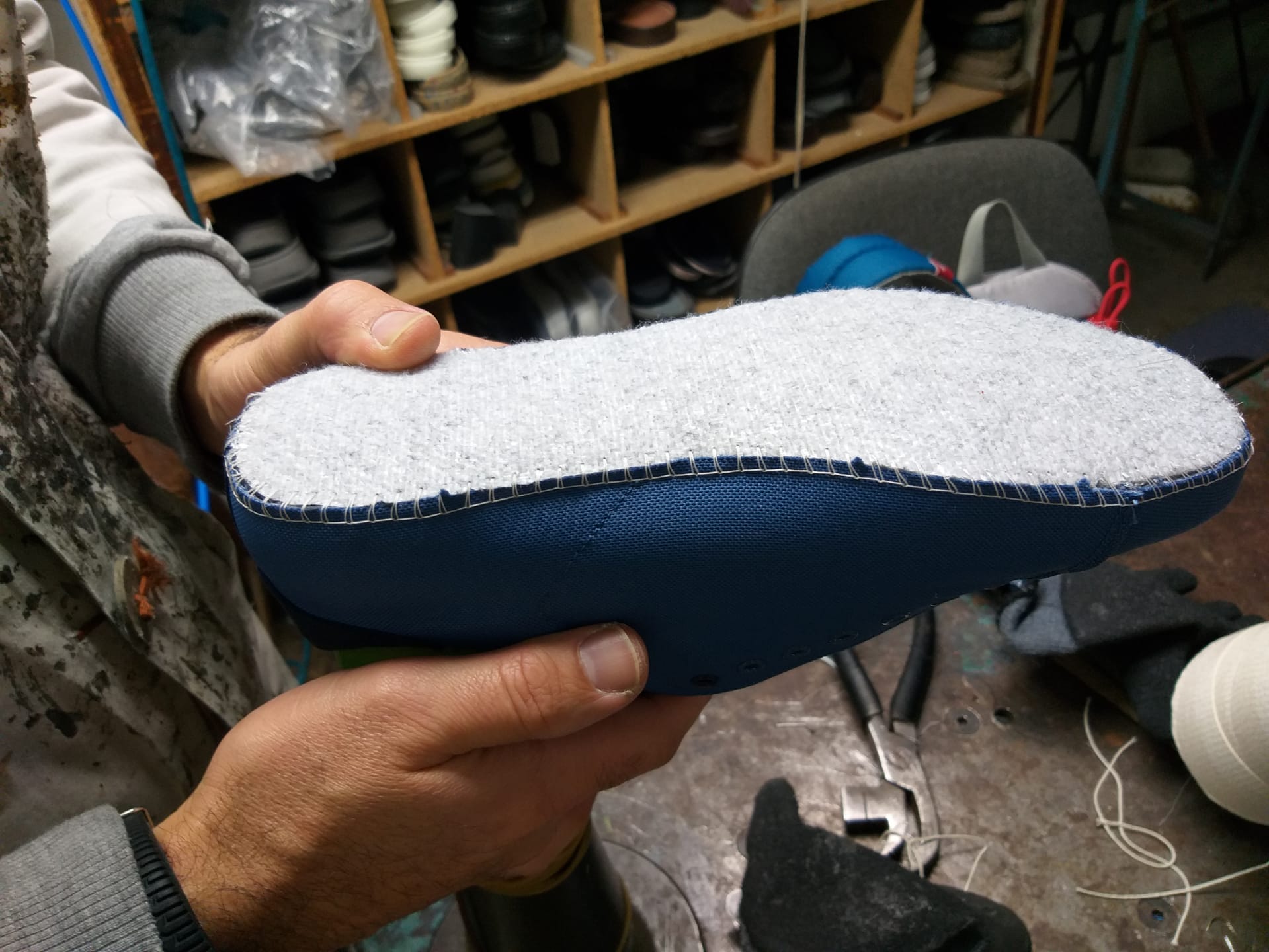
Choose constructions that enable repair by favouring stitched soles, reinforced seams and replaceable insoles and outsoles, so resoling or patching extends the service life of trainers and sneakers. Specify plant-based components with high-density outsoles and engineered layering to increase abrasion resistance and tensile strength, spreading the production footprint across more wears. Design for adaptability with removable insoles, modular midsoles and adjustable fastenings to accommodate orthotics or an evolving foot shape, so you can upgrade a single element rather than discard the whole shoe. Together, these choices let one pair cover many more kilometres before disposal, reducing material turnover and transport impacts.
Wear cushioned socks to stabilise fit and prevent hotspots

7. Design for repair and refurbishment to extend product life
Design for disassembly starts with modular construction and standardised mechanical fixings with replaceable attachments, so worn soles, heels or uppers can be removed with common tools. That lets high street cobblers and repair centres replace parts instead of discarding whole trainers. Opt for repair-friendly materials: single-material builds or compatible material families, thermoplastic adhesives and hard-wearing textiles that tolerate repeated stitching and cleaning. Label materials and join types clearly to simplify repairs and downstream recycling. Clear part labelling and standard fixings reduce the need for specialist equipment and keep material streams consistent for future recovery. These choices extend component life and preserve options for both repair and later recycling.
Publish step-by-step repair guides, exploded diagrams and part codes, and make replacement soles, insoles and hardware available through a central parts portal or via accredited repair partners to encourage repairs and reduce abandonment. Design components for refurbishment and remanufacture by building in inspection points, clear grading criteria and serial or batch identifiers to track repair history and material provenance for more efficient processing. Close the loop operationally with take-back and grading protocols, safe disassembly procedures and quality standards for refurbished stock so recovered parts and materials can be reintegrated into made-to-order production, lowering demand for virgin materials.
Keep trainers repair-ready with regular gentle cleaning.

8. Prioritise transparent, traceable sourcing to uphold ethical labour practices
Make supply chains visible by publishing a supplier map and factory list that shows country, production stage and a contact point so buyers and regulators can verify locations and pinpoint hotspots for improvement. Require chain of custody documentation for critical inputs, assign unique batch or lot IDs, and adopt digital traceability records to audit raw material origins and every manufacturing step end to end. Combine independent third-party audits with worker-led verification: publish audit findings, corrective action plans and progress updates, and use anonymous worker surveys to validate auditor reports and surface issues that audits may miss.
Structure supplier relationships to drive lasting improvement by favouring longer contracts, shared training programmes and capacity-building that tackle wage assessments, working hours and occupational safety rather than relying on one-off orders. Embed worker voice and measurable KPIs by requiring grievance mechanisms, ensuring access to trade unions or worker committees and publicly tracking indicators such as overtime hours, staff turnover, wage compliance and grievance resolution rates. These transparency, traceability and relationship-based measures create auditable records and operational levers so buyers, regulators and workers can monitor progress and hold suppliers to account.
Protect shipments while strengthening traceability and supplier accountability.

9. Encourage considered purchases to extend ownership and reduce waste
Make fit-first buying the norm: provide detailed size guides and step-by-step measurement tutorials, and offer optional foot scanning or virtual try-on so customers order the right size first time, reducing returns, excess packaging and disposal from repeat purchases. Combine this with subtle personalisation and a palette of neutral colours that work with many outfits; when trainers are framed as long-term staples rather than impulse buys, buyers form stronger attachments and keep them longer. Together, these measures steer customers towards more intentional choices and extended ownership.
Prioritise repair and replaceability: use stitched construction, standardised components and replaceable soles and insoles. Publish straightforward repair guides so owners can fix trainers rather than discard them. Match those measures with clear care instructions, repair kits, refurbishment options and take-back or trade-in programmes so worn pairs stay in circulation instead of ending up in landfill, boosting total product life and material recovery. Track metrics such as average ownership span, repair frequency and return rates to quantify longevity and waste reduction, and share those figures so shoppers can compare sustainability performance. Visible evidence of extended life and recovered materials helps customers make more informed, intentional choices about durability and end-of-life options.
Choose a neutral, durable layer for longer wardrobe life

10. Measure sustainability using clear metrics, recognised certifications and transparent accountability
Transparency should be the baseline. Makers of made-to-order vegan sneakers and trainers should publish standard, comparable metrics from life-cycle assessment, such as carbon footprint per pair, water use per functional unit (for example per 10,000 km walked), material circularity score, percentage of virgin material and end-of-life recovery rate. Calculation methods should be included so readers can directly compare made-to-order products with mass-produced equivalents. Independent verification strengthens credibility. Organisations should commission third-party LCAs, apply recognised material and labour standards, and publish audit findings and methodologies to reduce greenwashing and increase accountability. They should also set baselines for production scrap, return rates, on-demand fulfilment percentage and per-pair emissions, convert goals into clear units, and publish raw data alongside verification statements to show measurable progress.
Give consumers product-level traceability by adopting a digital product passport or QR code that displays material composition, carbon and water footprints, repair instructions and end-of-life options. That transparency lets shoppers verify claims and make more informed choices. Assess items using a functional unit and real-world performance metrics, such as estimated wear-years or kilometres, a repairability score and lifetime impact per wear. For trainers or high tops, measuring wear-years per pair makes comparisons practical and meaningful. Comparing these metrics with mass-produced alternatives shows how lower overstock and higher utilisation cut waste and reduce overall impact.
Made-to-order vegan sneakers cut waste and extend product lifespans by matching production to confirmed demand, favouring repairable materials and shortening supply chains to reduce transport emissions. These practices deliver measurable benefits: fewer unsold items, lower return rates and stronger repair and take-back programmes that keep materials circulating.
Use these ten headings as practical levers to expose waste, curb overproduction, favour durable vegan materials, optimise logistics and design for repair and reuse, so makers and readers can apply them step by step. Compare product-level metrics, request traceability and repair options, and favour suppliers who publish third-party verification and clear end-of-life pathways to support a footwear system that produces less waste and lasts longer.